
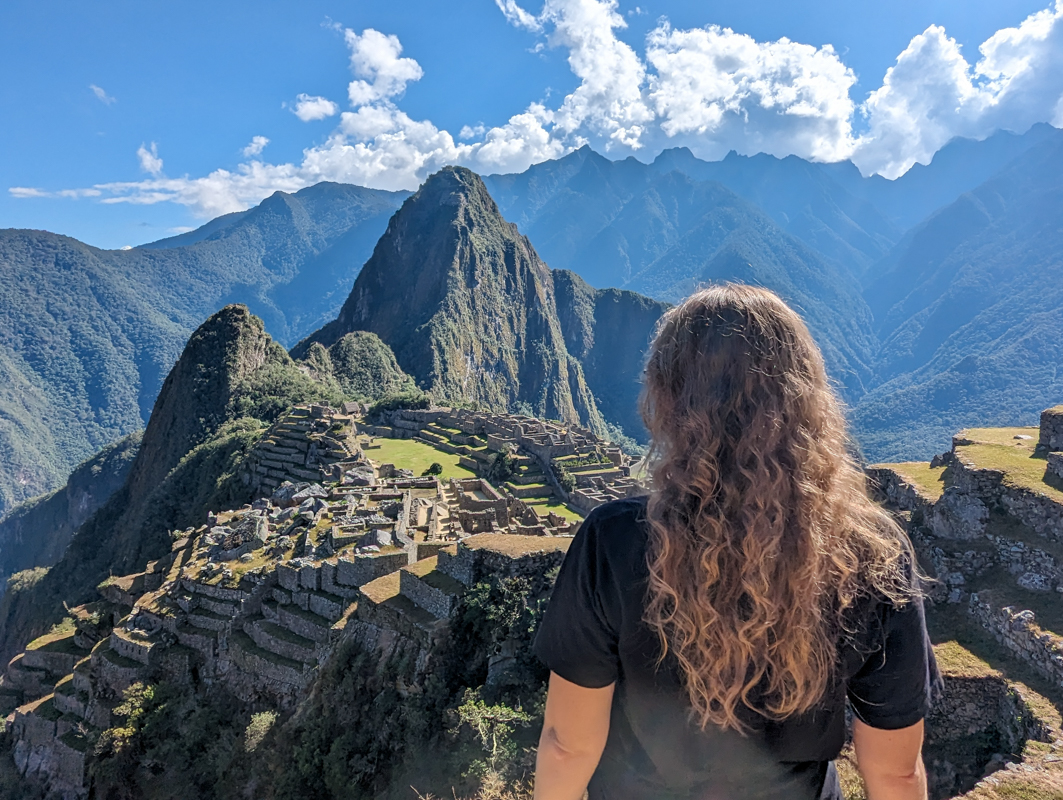
Peru is a fascinating country with a mixture of landscapes and cultures to discover. You can traverse coastal cities, ancient ruins, hike mountains and explore rainforests all within one country. There is so much to see, it can be hard to put together a two week itinerary for Peru. This itinerary covers the best of the cities, mountains and of course Machu Picchu. This Peru 2 week itinerary doesn’t include a multi-day trek to Machu Picchu or cover the Amazon Rainforest. If you want to cover those add a few more days or skip other parts of the trip.
This post contains affiliate links, meaning I may get a small commission but at no extra cost to you.
Best way to travel around Peru
Peru is a fairly big country so domestic flights are an option, especially if you’re short on time. This itinerary however focuses on travel primarily on buses and a couple of trains. We’ll focus on the south of the country so there isn’t such a big area to cover. However, you can still expect some long bus journeys of 7+ hours.
Don’t let this put you off though! I highly recommend booking your buses with Peru Hop. You can buy a flexible pass that covers different routes. So if you want to stay longer in any particular place you have the option to change your tickets. Peru Hop buses are safe and comfy, even for overnight journeys! Every bus has an English-speaking guide who can help with recommendations and tours for your next stop too.
2 Week Peru Itinerary
This itinerary will start in Peru’s capital of Lima. We’ll end in Cusco.
Day 1 – Lima
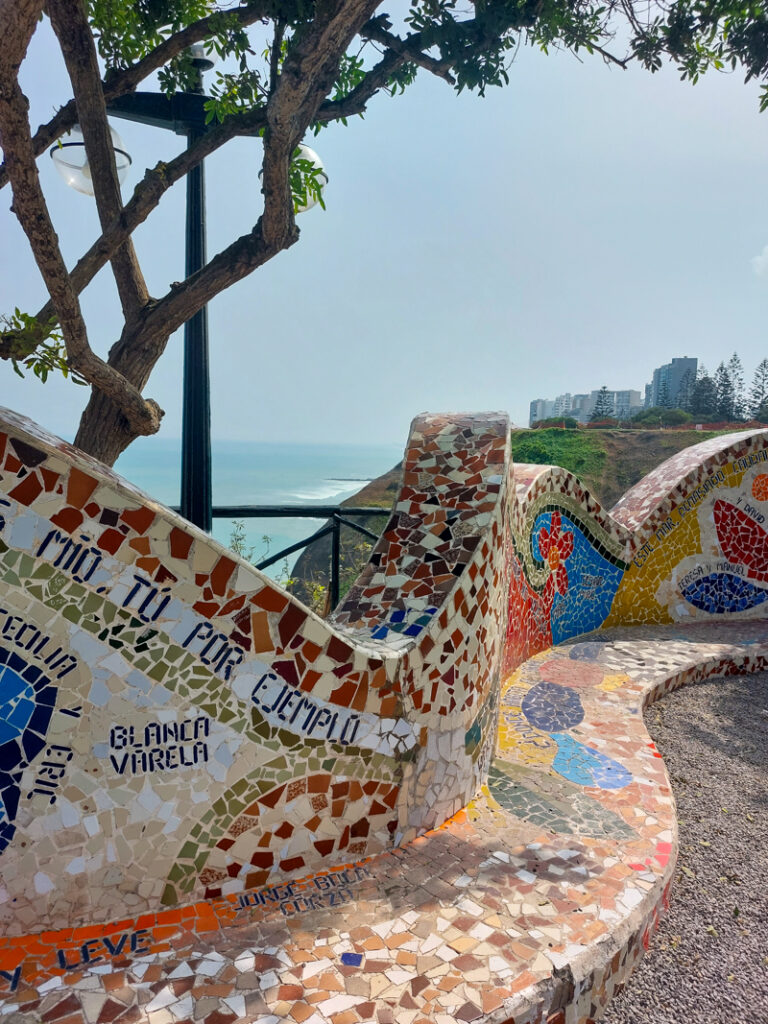
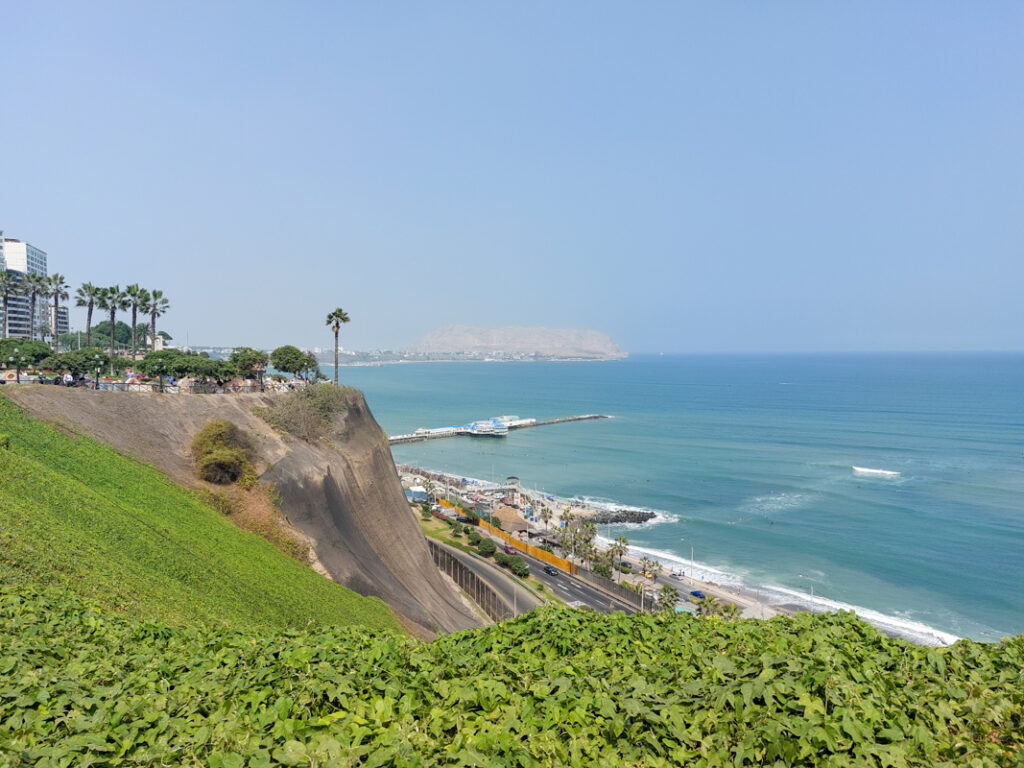
I recommend staying in the Miraflores area of Lima. It is one of the wealthier areas of the city, situated by the coast. It’s also in close proximity to other areas of interest in Lima. Start your day here with a walk along the boardwalk and a visit to Parque del Amor (Love Park) for some fantastic views.
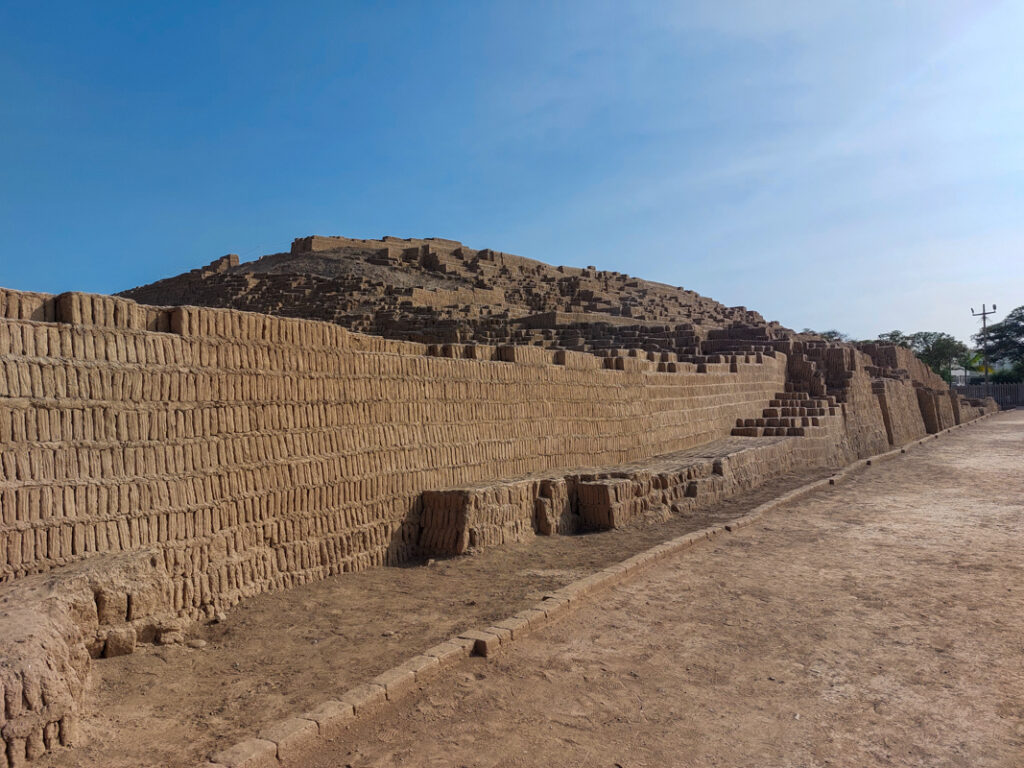
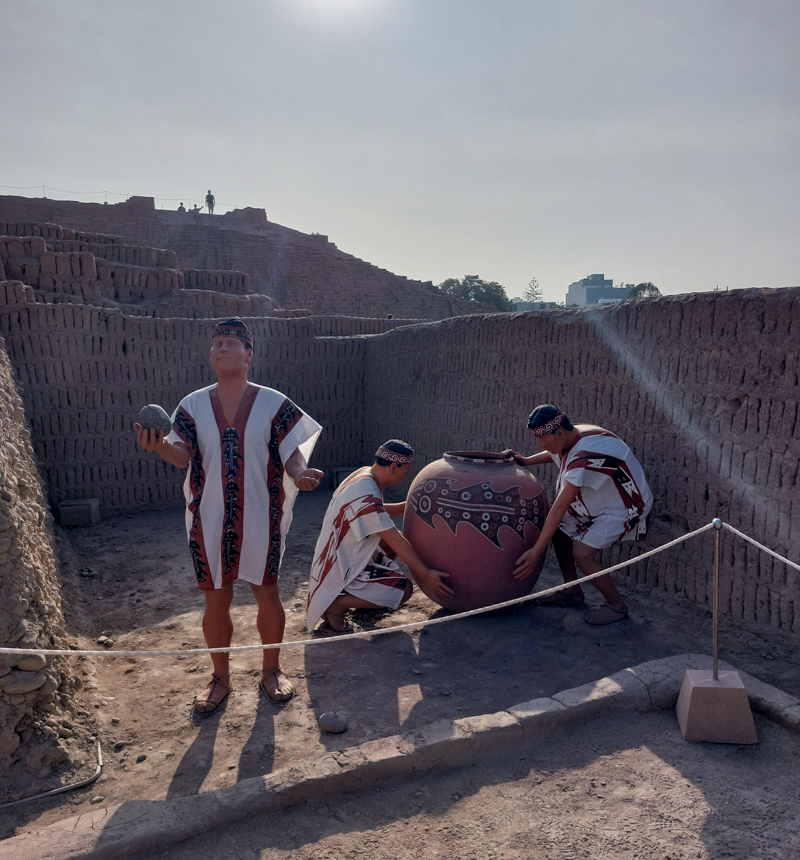
Whilst in Miraflores, visit the Pucllana Site Museum. Here you will be able to explore the ruins of an ancient clay pyramid built between 200 and 700 AD (long before the Incas).
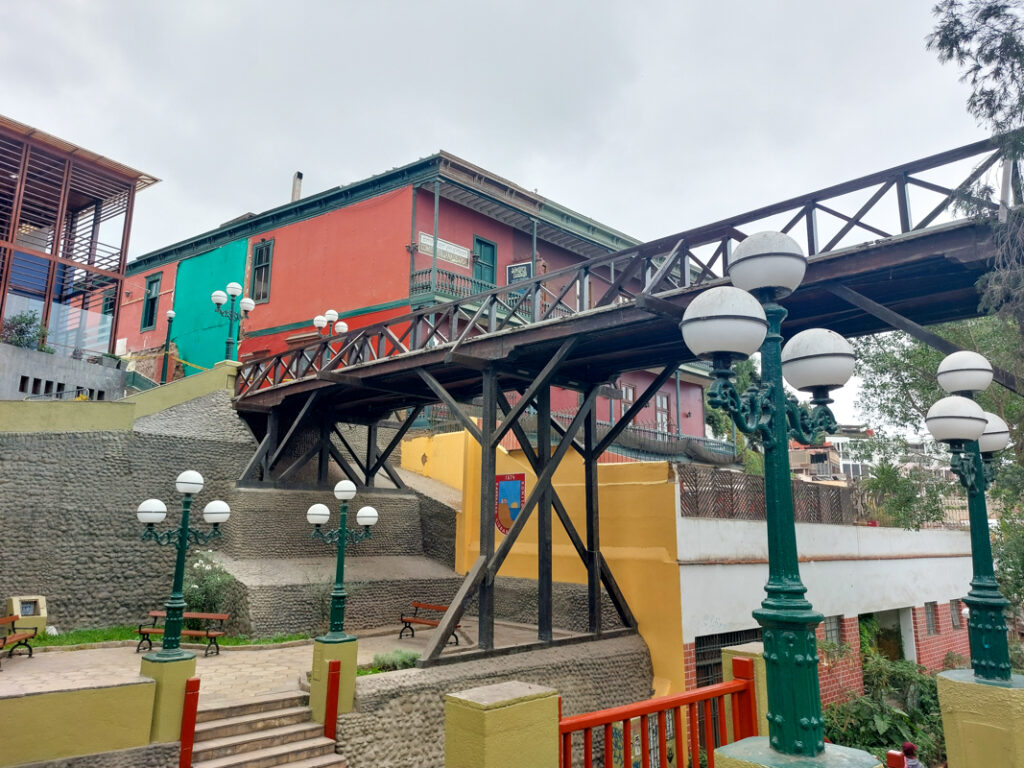
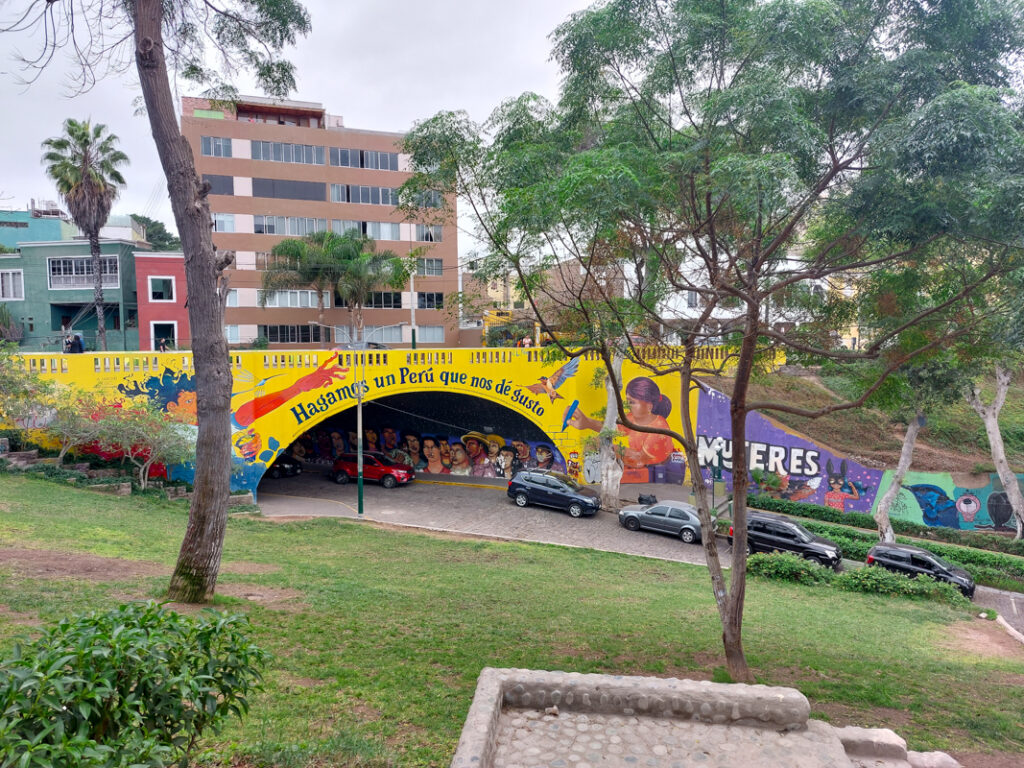
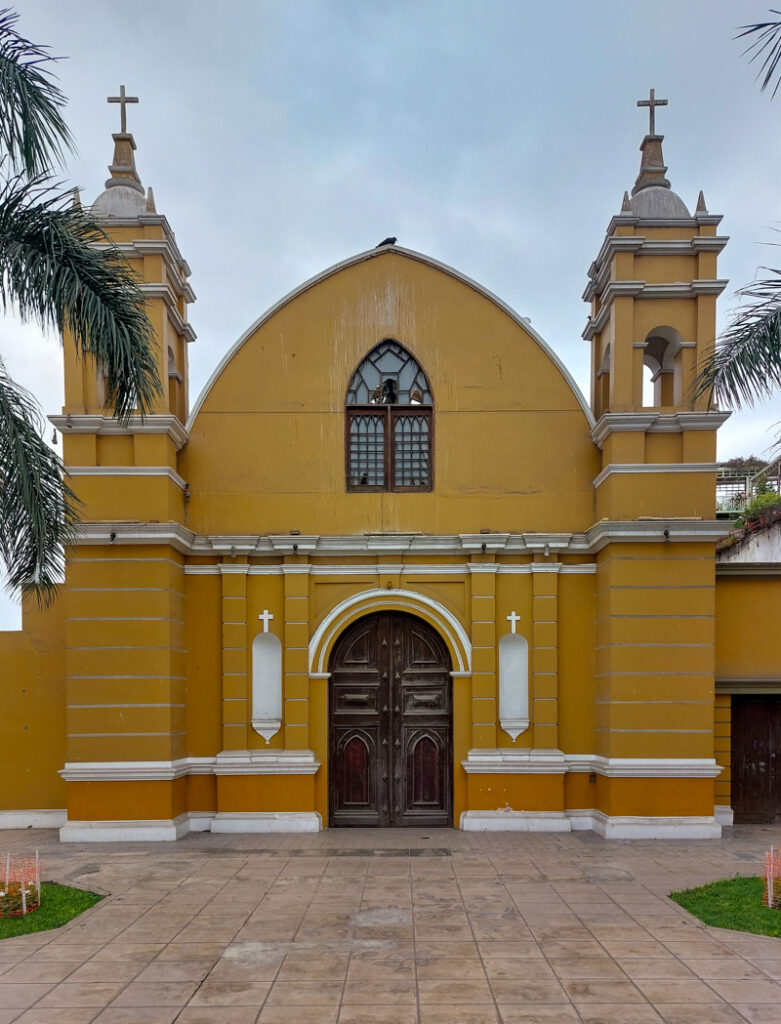
In the afternoon, head south to Barranco, another neighbourhood of Lima. Barranco is a colourful, artistic district where you will find stunning architecture and artisan shops and markets. Be sure to visit the Bridge of Sighs and El Cacaotal chocolate shop.
For lunch and dinner options in Miraflores, head to Terraza San Ramon – a food hall with an array of Peruvian and international cuisines.
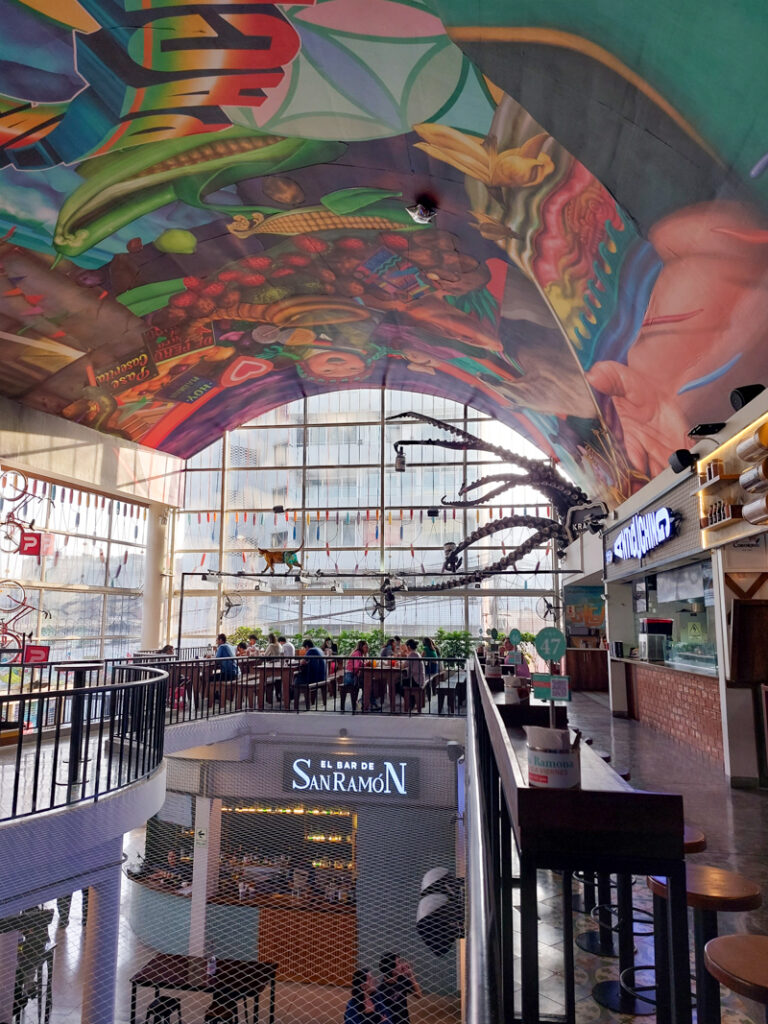
Day 2 – Lima
On your second day in Lima, head to the historic centre. Start with a walking tour to get your bearing and learn more about the history of Lima and Peru. I would recommend Free Walking Tours Peru. You’ll see Plaza de Armas, Church of Santo Domingo, Parque de la Muralla and more.
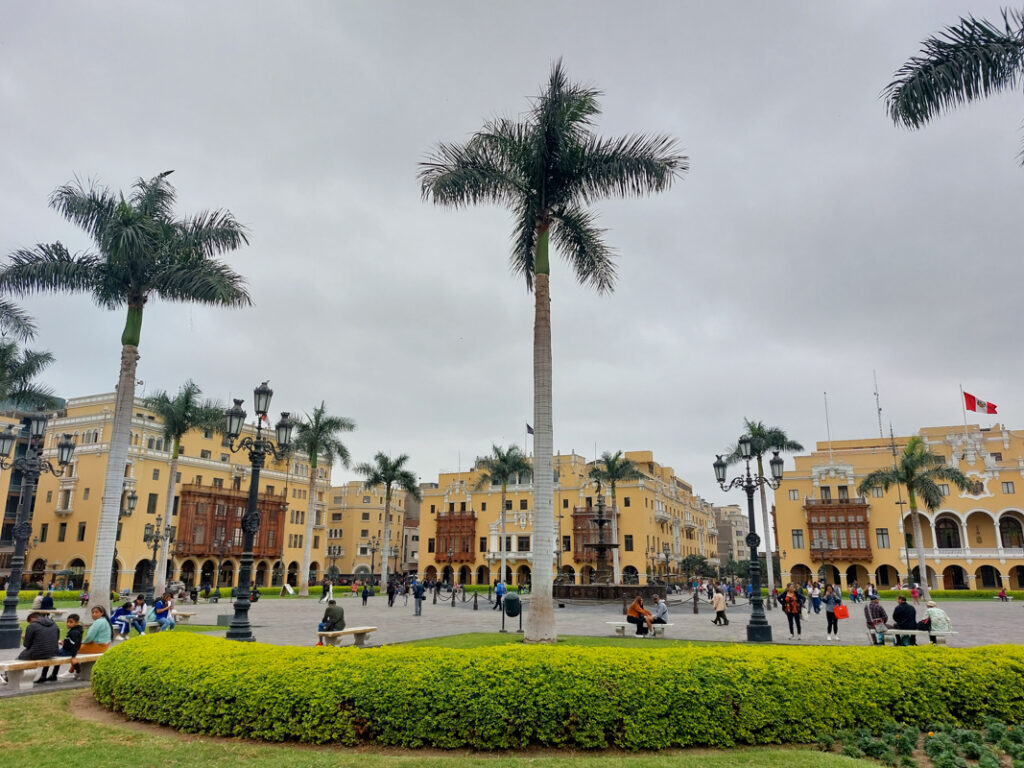
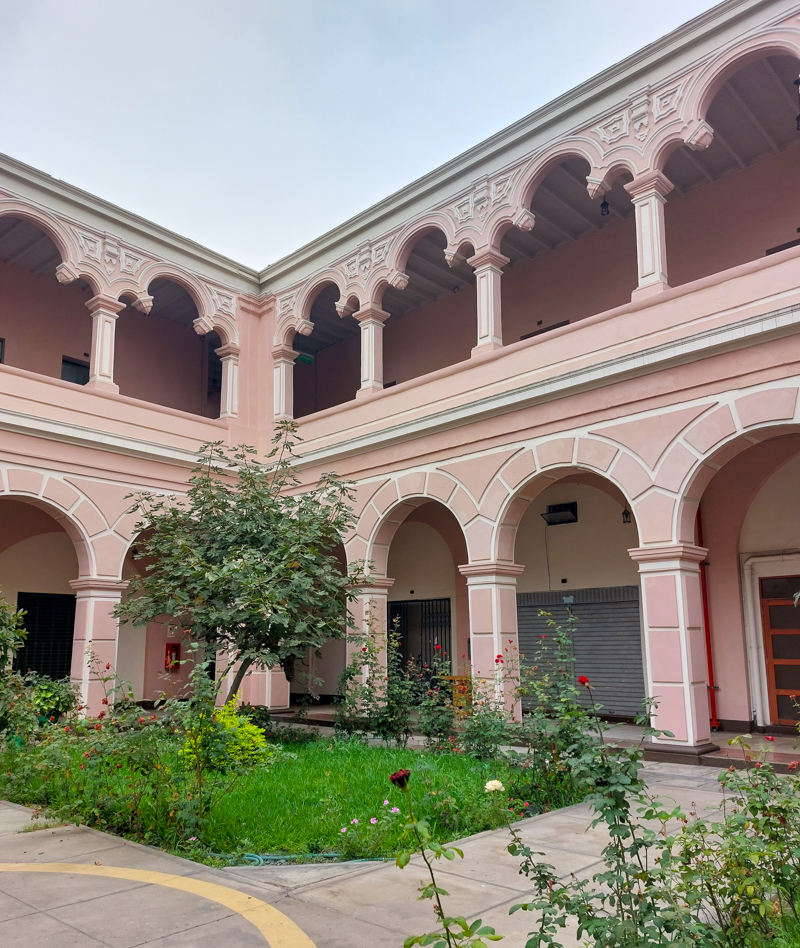
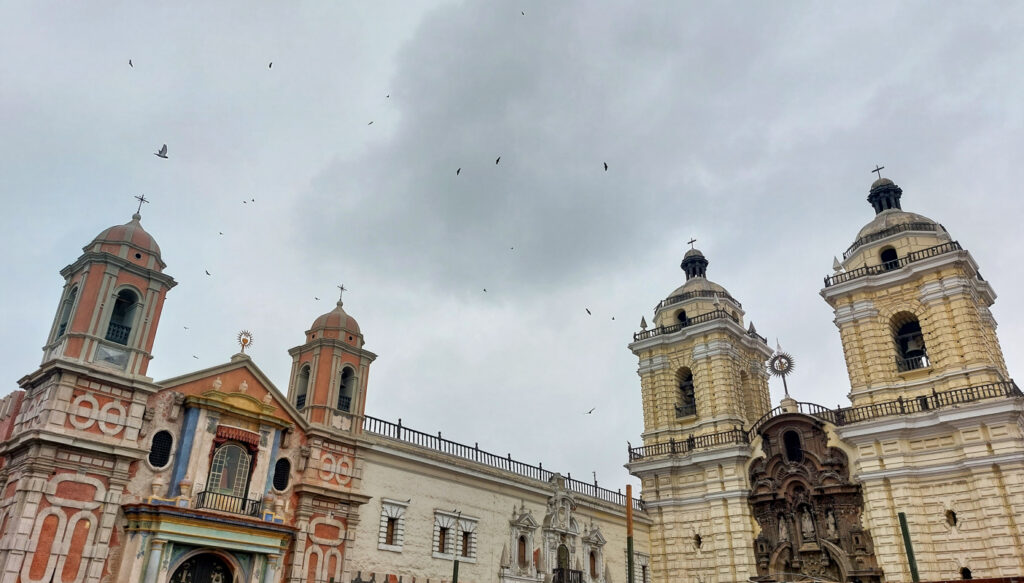
After the tour, grab some lunch then visit the Basilica and Convent of San Francisco to explore the eerie catacombs. There are many other beautiful churches to explore in the old town.
Day 3 – Paracas
Day 3 will be an early start as you hop on your first bus to head to Paracas. As mentioned, I recommend booking with PeruHop for this itinerary.
You should arrive in Paracas around midday. Paracas is often referred to as the ‘poor man’s Galapagos’ due to its abundance of wildlife and small islands just off the coast. We had just been to the Galapagos islands a couple of weeks before and it’s definitely not as colourful and vibrant but still well worth a visit!
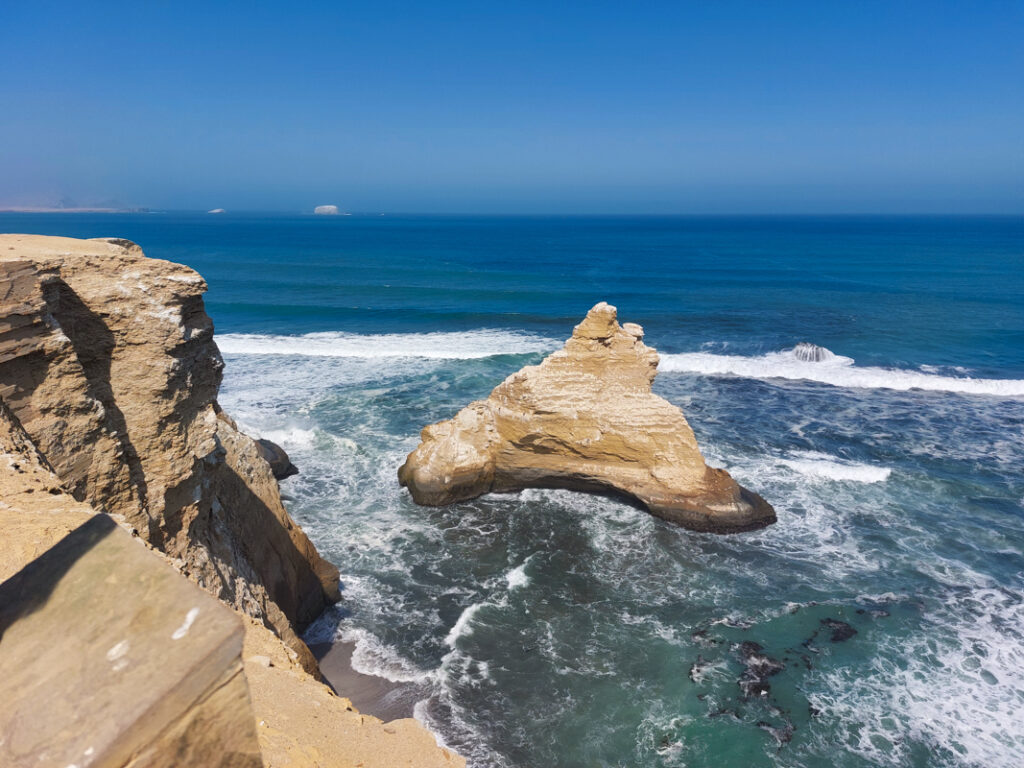
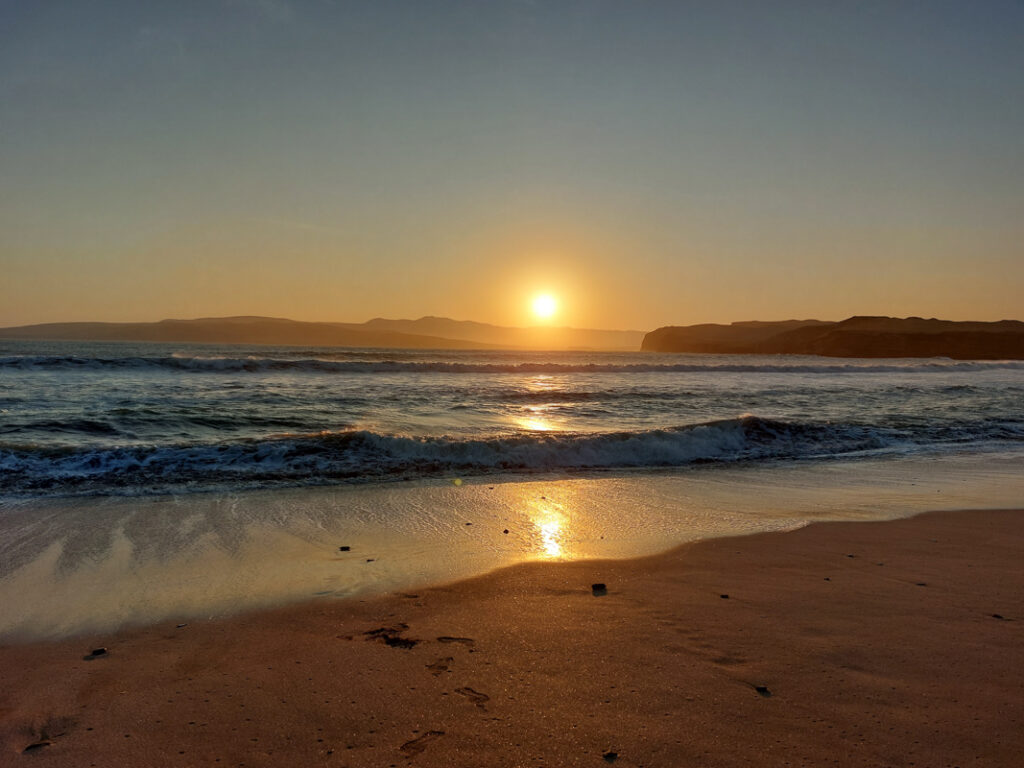
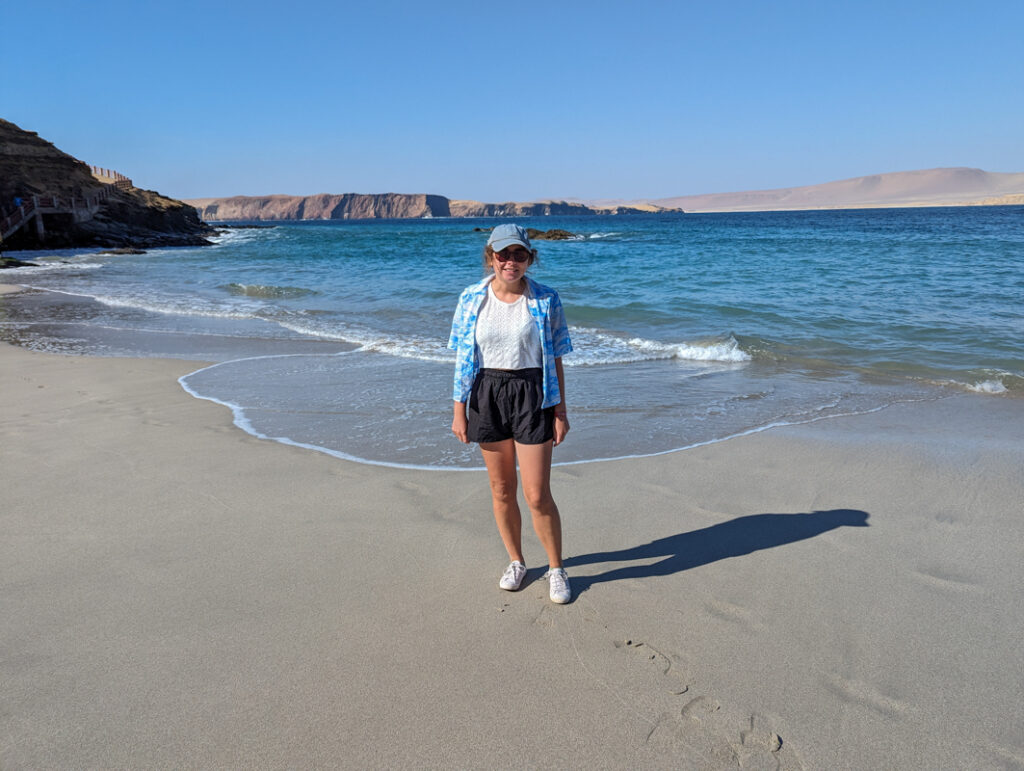
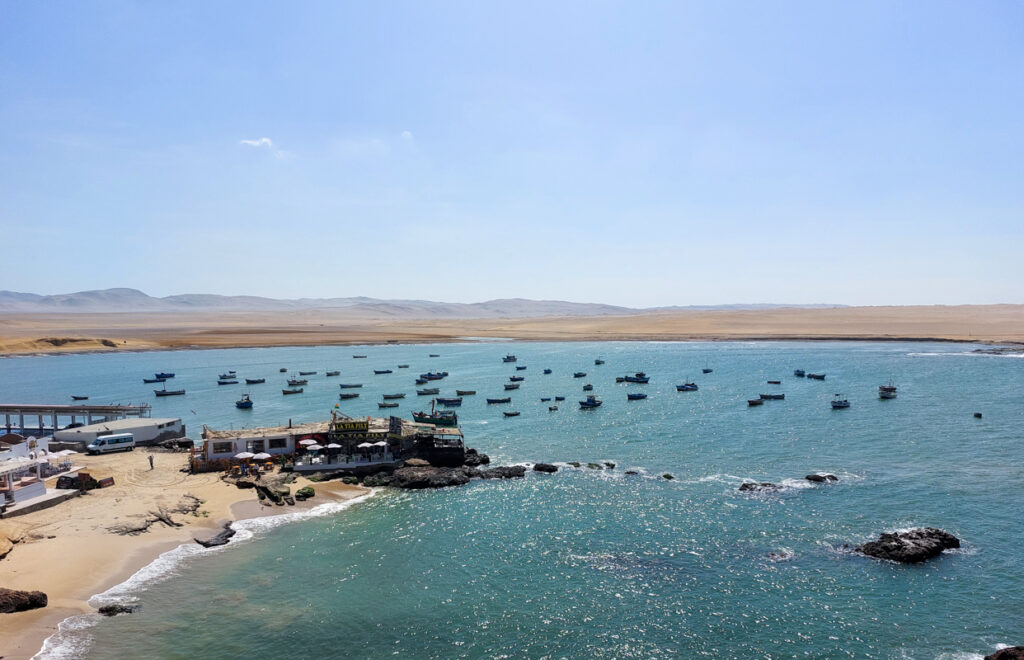
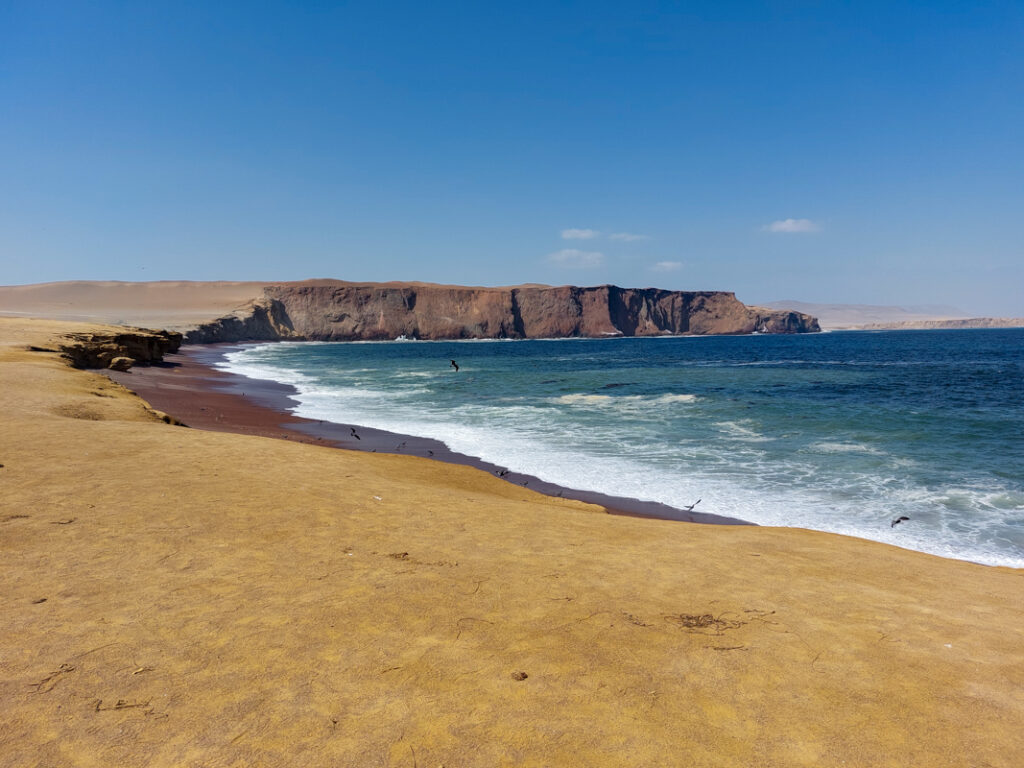
If you feel confident driving a moped/scooter, I recommend hiring one for the afternoon to drive around the Paracas National Reserve. If you don’t want to drive yourself, book a tour. The Reserve is a desert landscape on a peninsula just south of Paracas town. Spots I recommend visiting in Paracas National Reserve are:
- La Catedral – point rock formation in the sea
- Playa Roja – red sand beach
- Langunillas – harbour and beach with lots of little boats and a restaurant.
- Playa Yumaque – a great beach spot to watch the sunset!
Day 4 – Huacachina
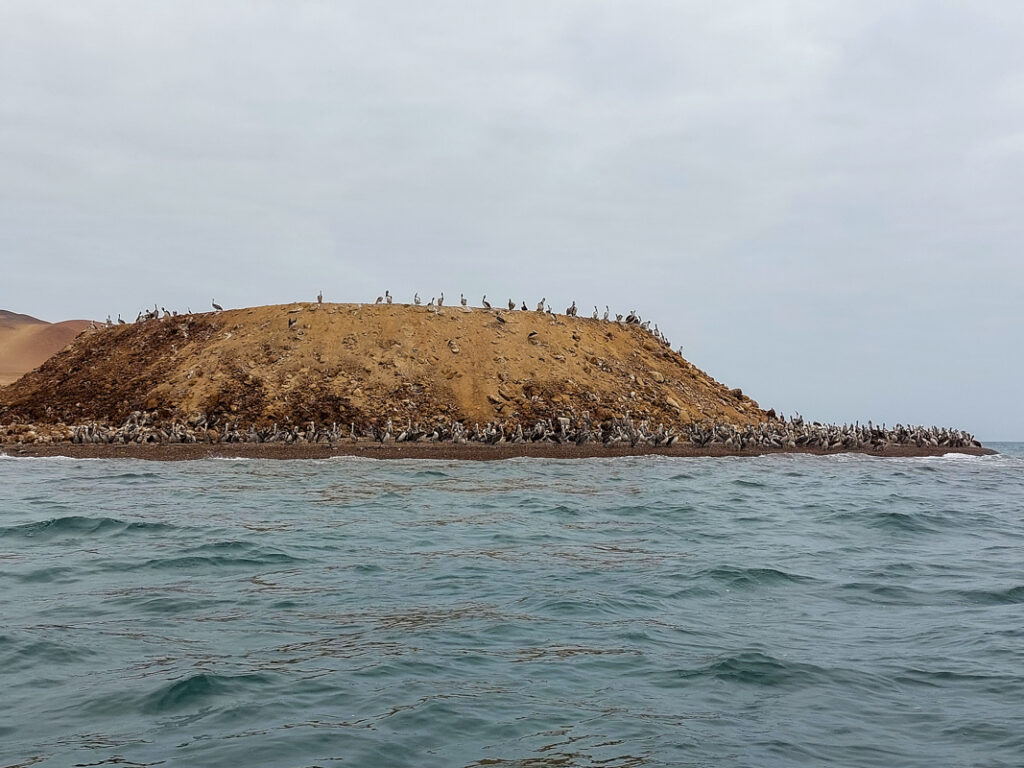
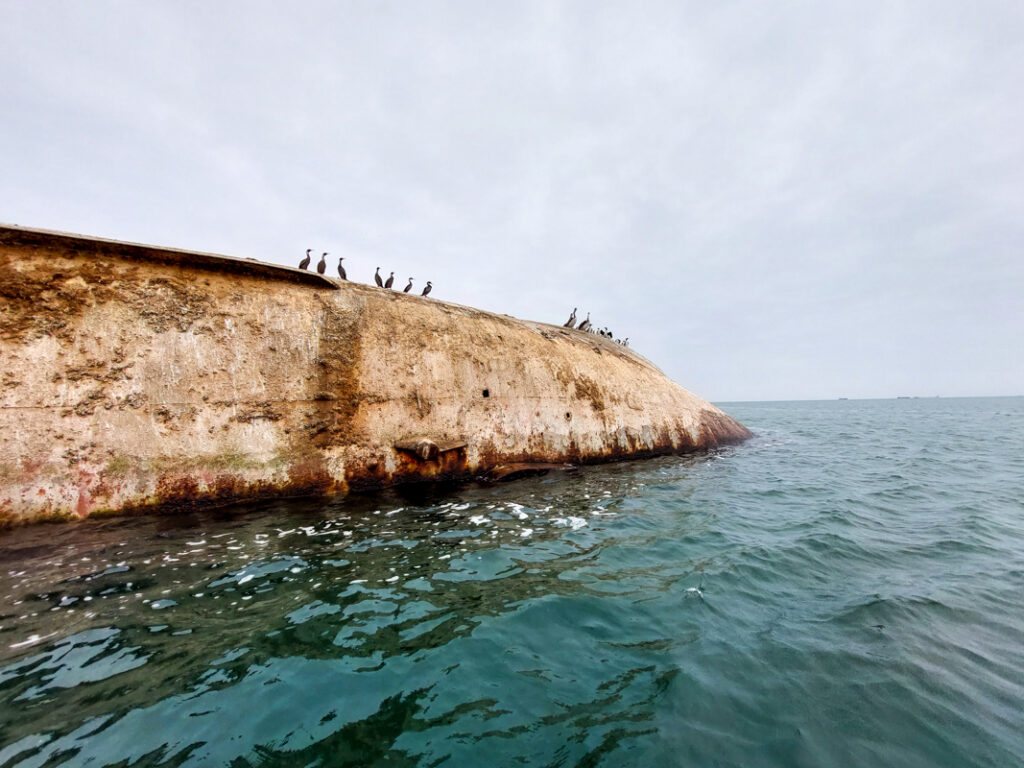
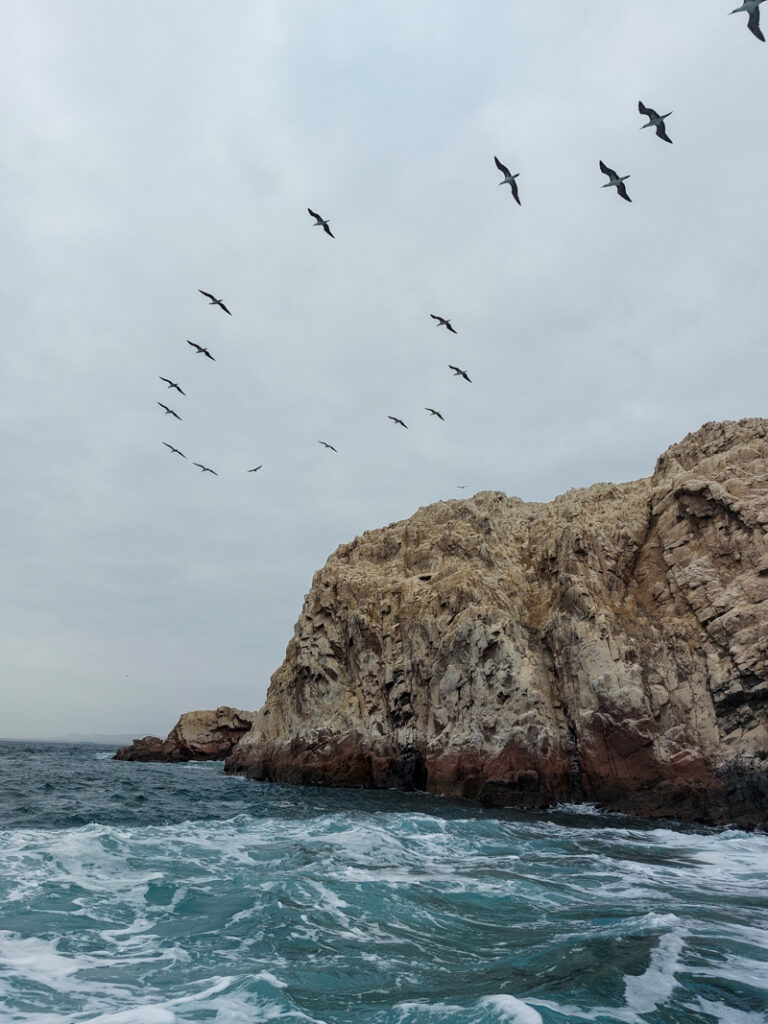
In the morning before leaving Paracas, head into the water for a boat trip around the Ballestas Islands. You can book a 1.5 hour tour via PeruHop that departs at 7.30am or 10am. If you’re not travelling with PeruHop or want a longer tour, take a look at these options.
During the tour you’ll be shown islands covered in sea birds, huge sea lions, penguins and lots more wildlife. You’ll also learn more about the landscape and see La Candelabro, a mysterious rock carving, similar to the Nazca lines.
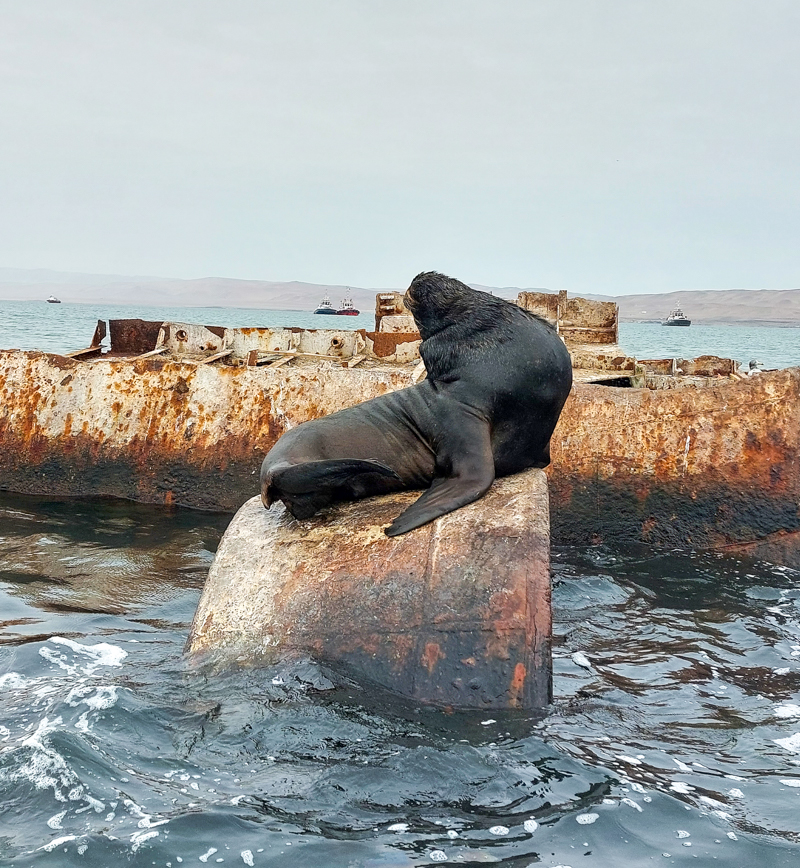
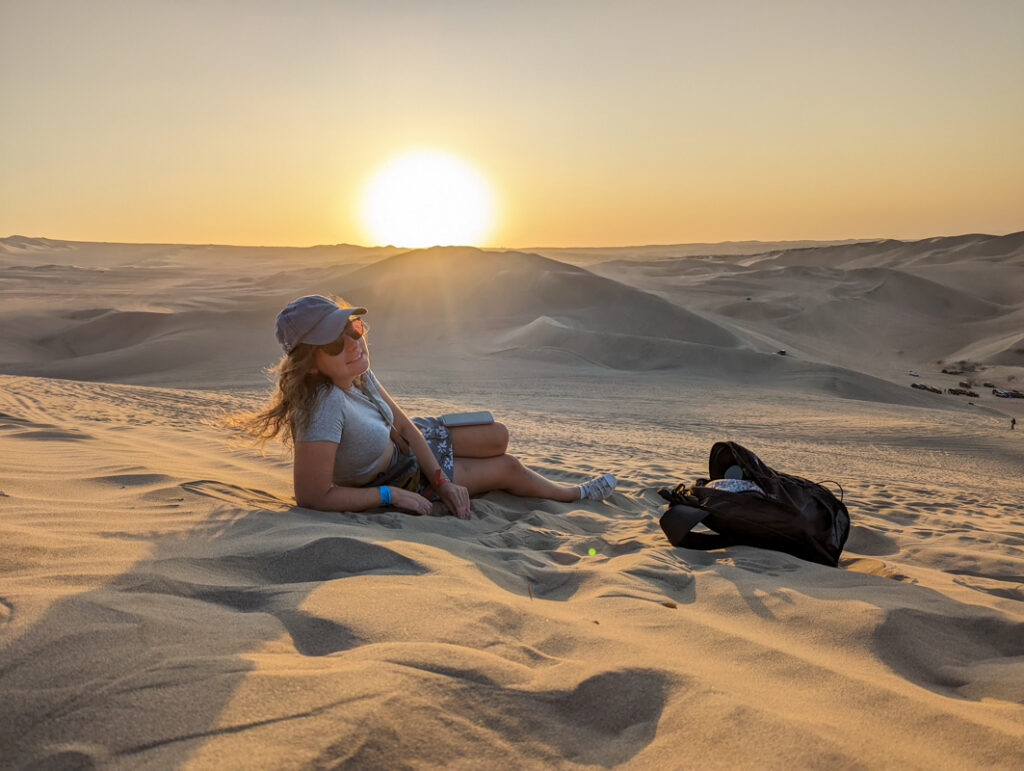
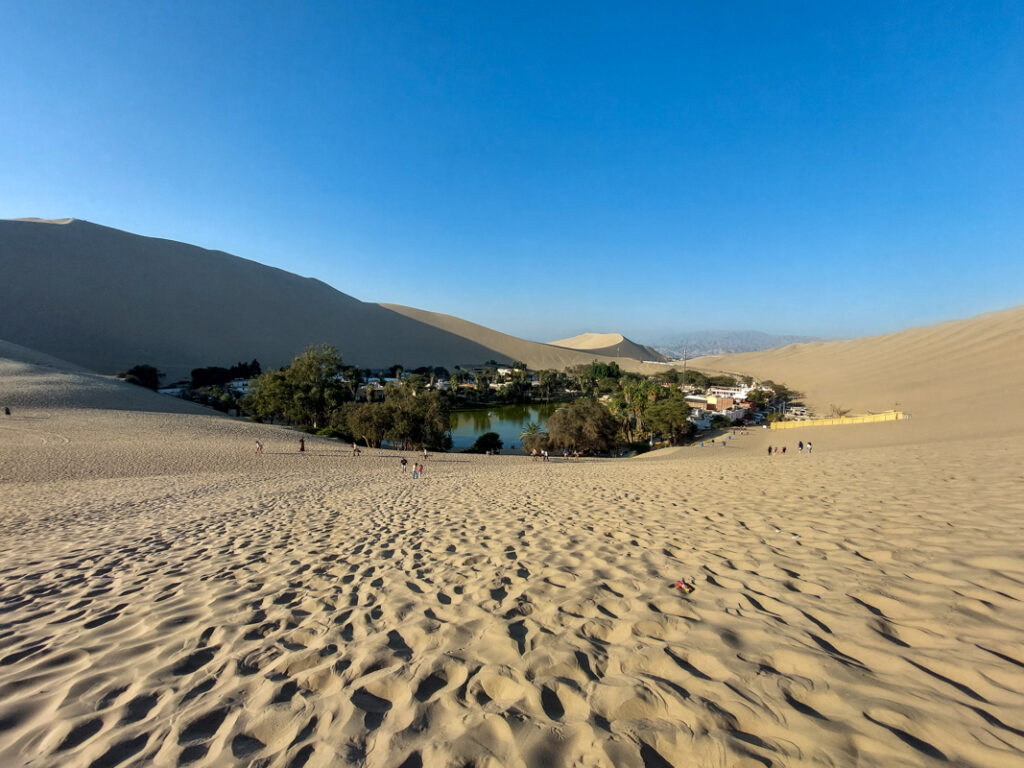
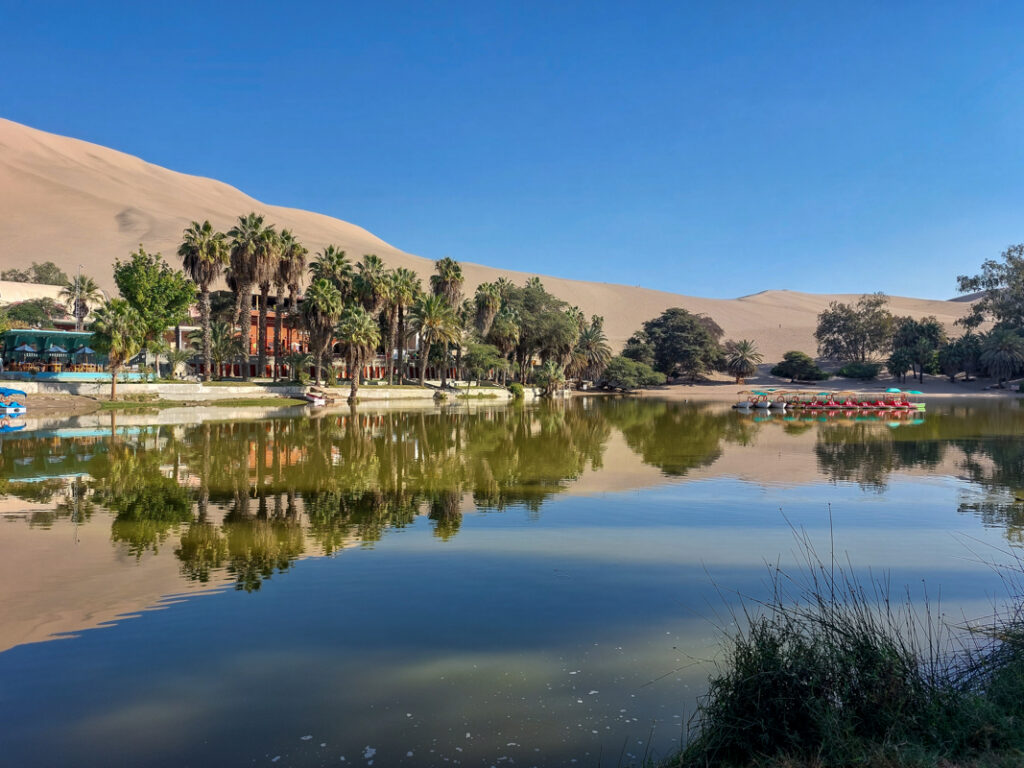
At 1pm, jump back on the bus for a short trip to Huacachina (just over an hour). Huacachina was one of my favourite places in Peru. It is a literal desert oasis. A small town circling an oasis pool surrounded by immense sand dunes. It’s very picturesque and looks just like a cartoon.
For a small fee you can enter the dunes and try to scale them for the best sunset spot. From the top of the dunes, to one side you can see endless waves of sand. On the other side you can see the surprisingly nearby city of Ica which does ruin the illusion a little. So try not to look north east! If you’re feeling adventurous, you can go sand boarding in the dunes too.
We stayed in a lovely hotel called Rochabus in Huacachina which I would recommend!
Peru Travel Posters
Day 5 – Nazca
The next PeruHop bus departs Huacachina at 10:30. If you have time before the bus, take one last stroll around the oasis.
This day will be a long day and night of travelling but Peruhop breaks up the journey so it won’t feel too long! The first stop is at a Pisco vineyard. Pisco is a Peruvian spirit and the key ingredient in a Pisco Sour cocktail. This may not sound ideal at 11am but the tour was super interested to learn how it is made, you’ll get to sample some too and have lunch here.
The second stop later on in the day is to see the Nazca Lines. The Nazca lines are huge geoglyphs etched into the sand around 2000 years ago. They depict different animals such as the spider, hummingbird and monkey. Whilst you can extend your trip to take a helicopter flight over all the lines, most people on our bus just ascended the tower to the viewing platform.
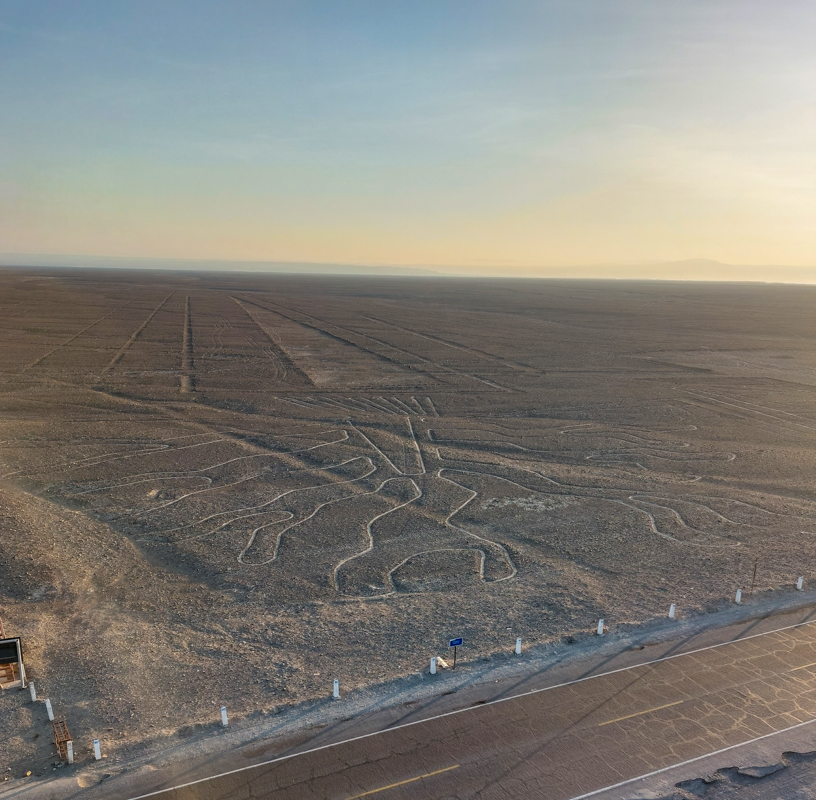
In Nazca, we were also about to pick up some snacks before settling in for the night journey with some blankets.
Click here to read about more things to do in Arequipa.
Day 6 – Arequipa
On Day 6, you’ll arrive bright and early in Arequipa at 6am. Check in to your hotel or hostel, we stayed at Villa Sillar. Take some time to recuperate from your night journey if you need to! You’ll likely be tired this day and you might start to feel the effects of the high altitude. Arequipa is 2,335 metres above sea level. Technically, altitude sickness starts above 2,500 metres but if you start to feel dizzy, nauseous or have headaches, take some medication or try the local remedy, coca tea.
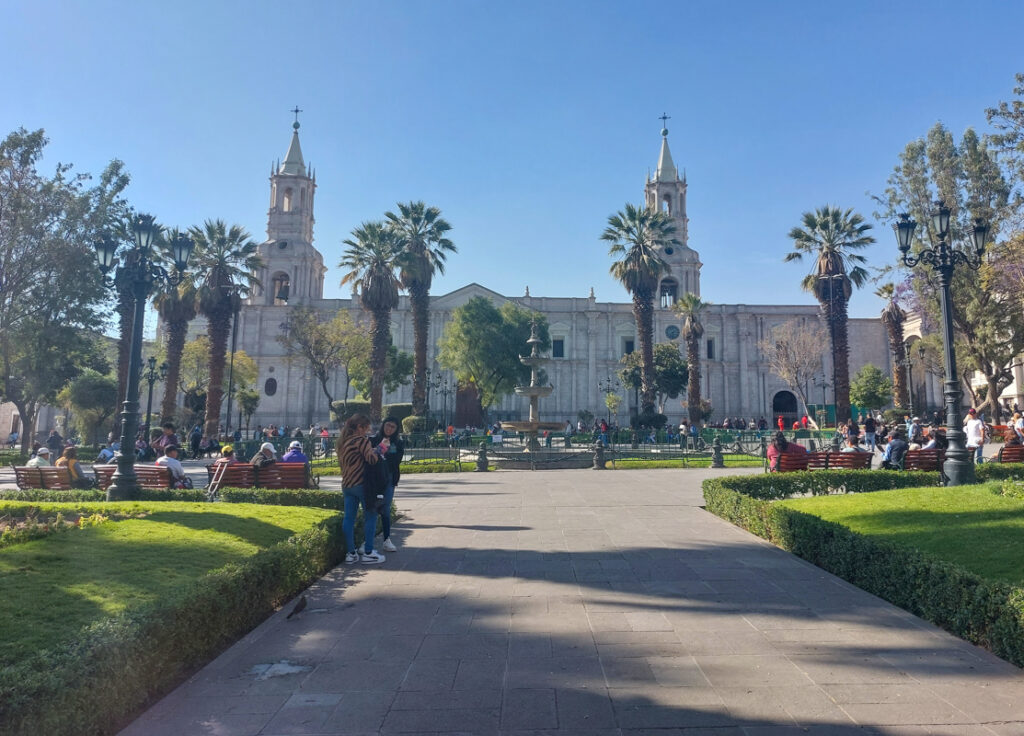
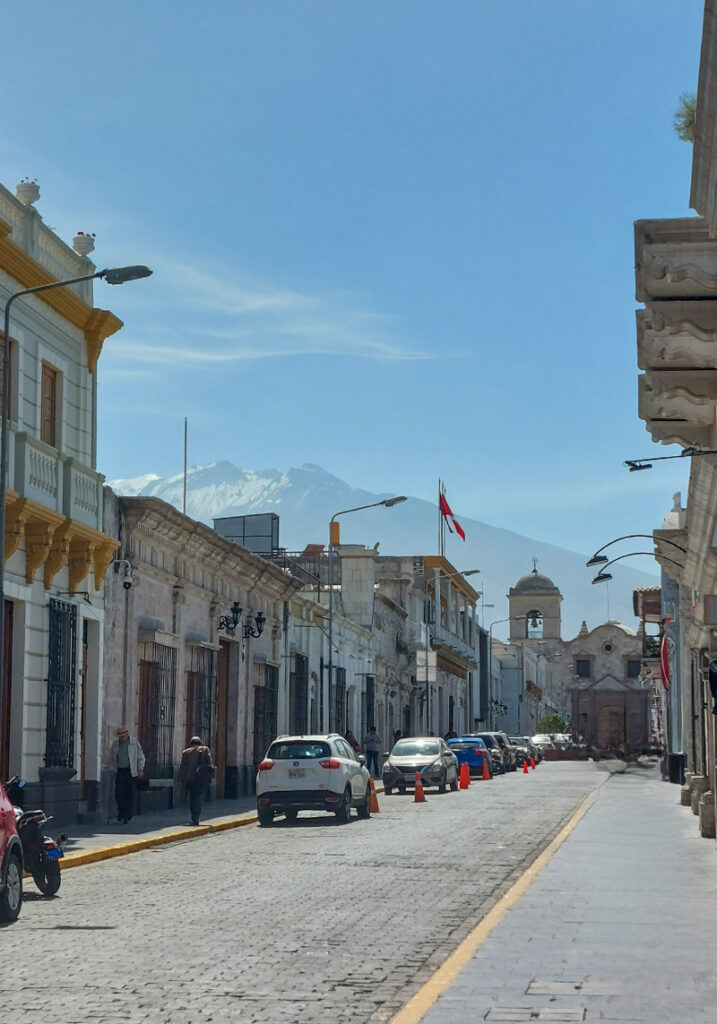
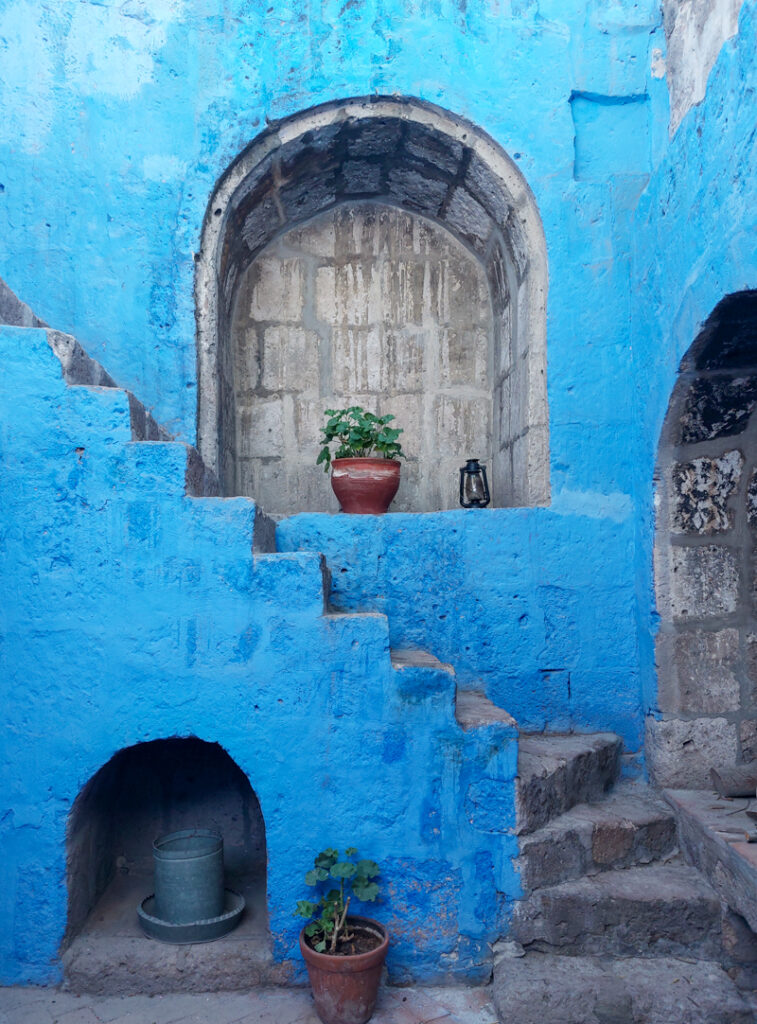
The two main things I’d recommend doing on your first day in Arequipa (as well as wandering around the old town) are visiting the Santa Catalina Monastery and the Museo Santuarios Andinos. The monastery is a colourful, picturesque complex that dates back to the 16th century.
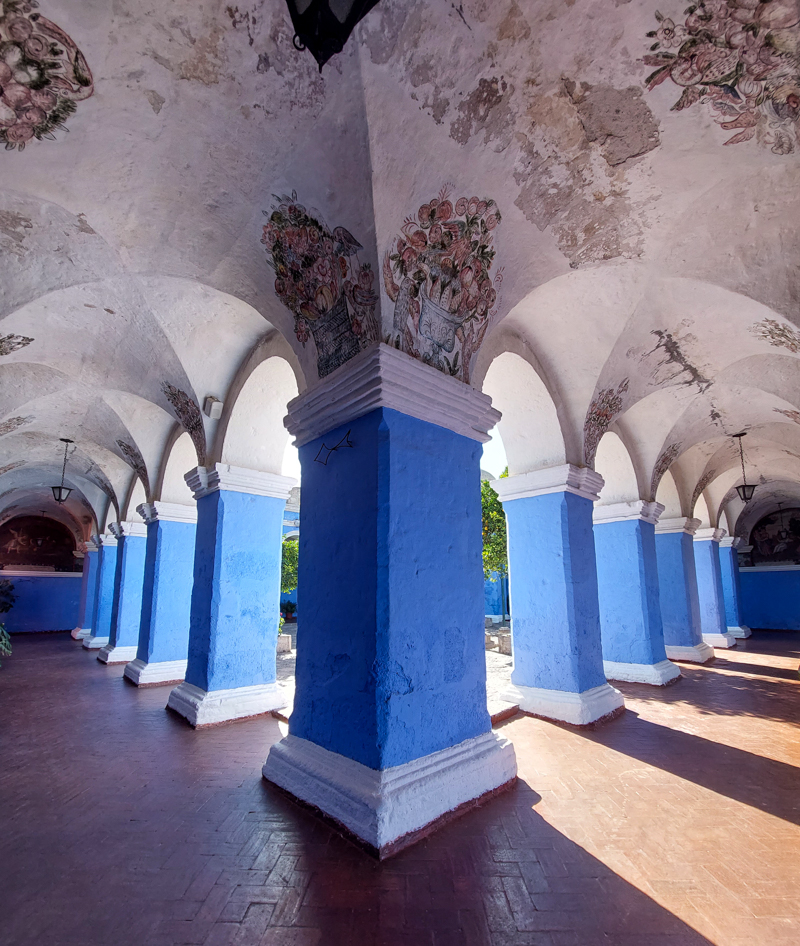
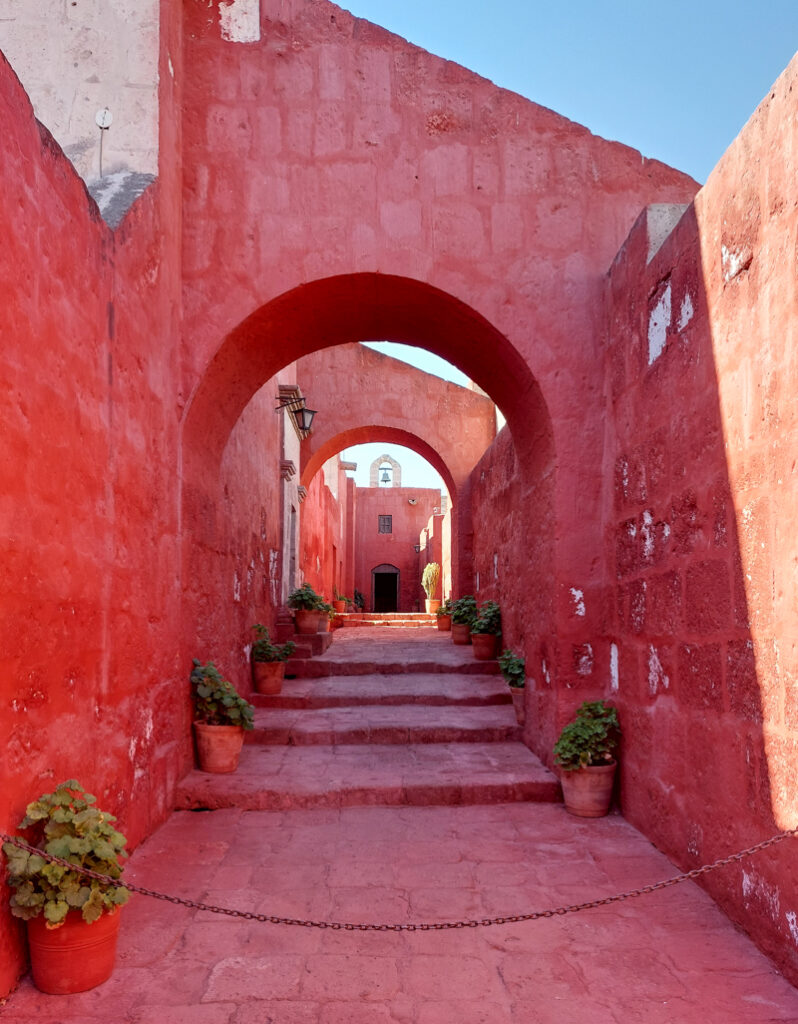
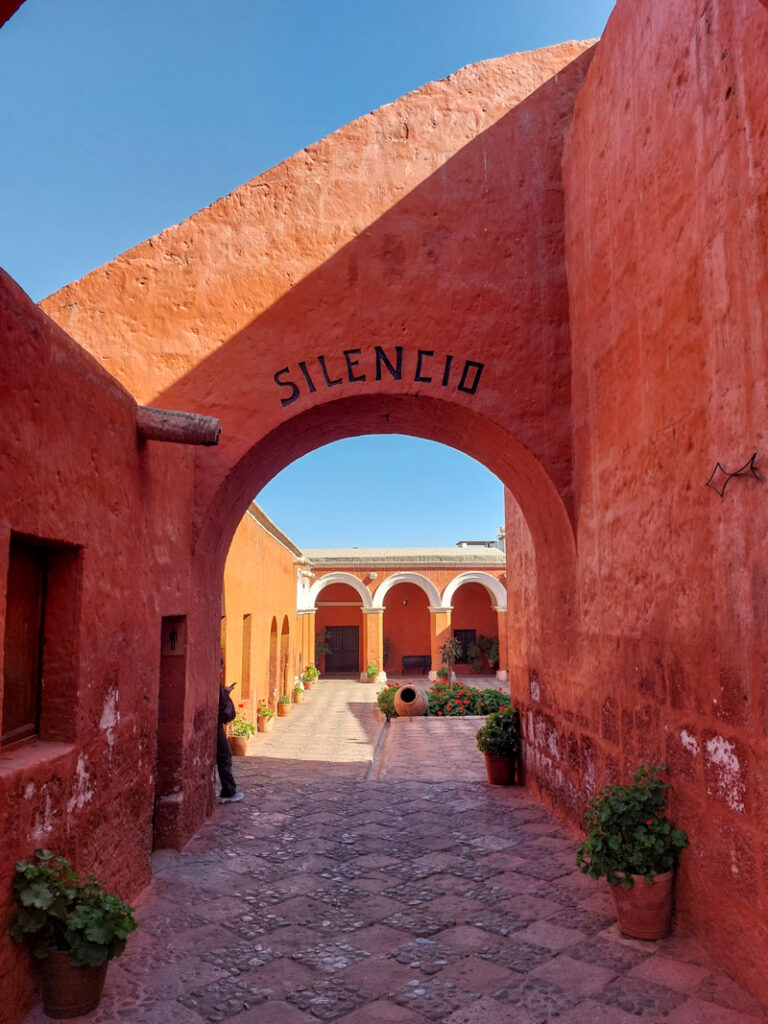
Museo Santuarios Andinos is a museum filled with archaeological artefacts uncovered in the Andean mountains. The star of the exhibit is Juanita, a remarkably well-preserved mummy of a teenage girl. She was discovered 6000 metres above sea level in the Peruvian mountains. Juanita lived around 500 years ago and is thought to have died as part of a ritual sacrifice.
Day 7 – Colca Canyon Day Trip
Take a day trip from Arequipa to the Colca Canyon. The tour recommended by PeruHop has a super early start with a pick up at 3.30am so be prepared! The Colca Canyon is a valley near Arequipa known for spectacular views, wildlife, hot springs and rural villages. It gets very cold and you’ll be reaching even higher altitudes so wrap up warm and drink coca tea at any opportunity you can get!
We actually did the two day tour of the Colca Canyon with PeruHop, there are also trekking tours available. If you have more time, this might be something to consider. However, many of the highlights are still included in the one day tour and it does get extremely cold at night so you might want to avoid an overnight stay!
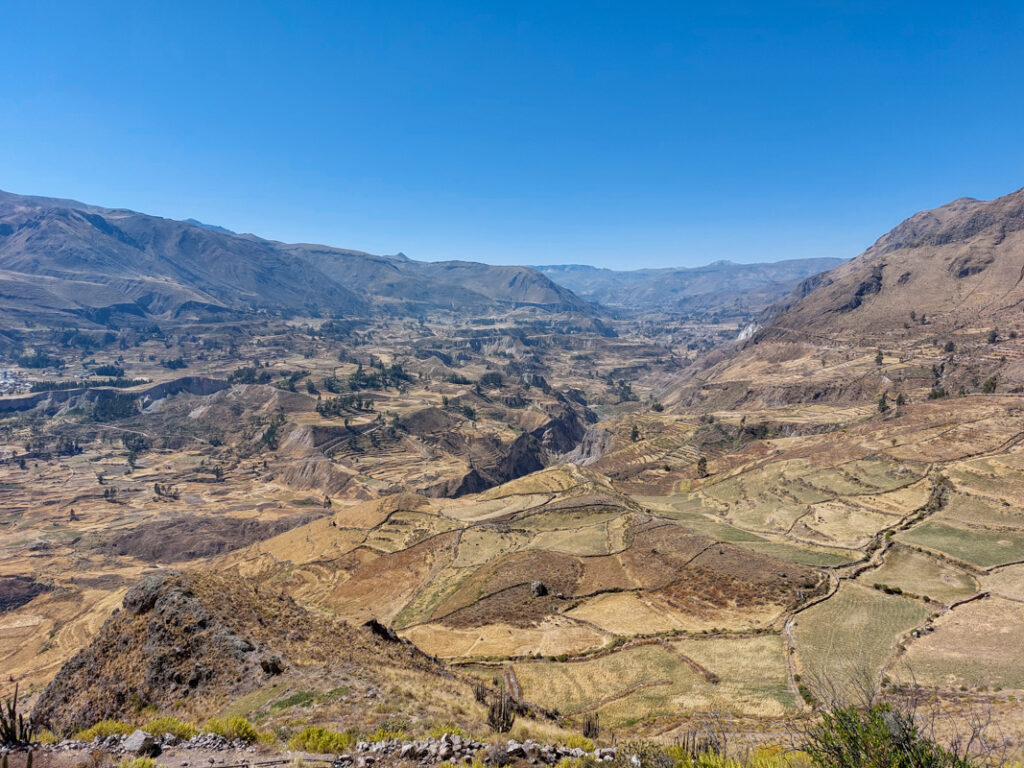
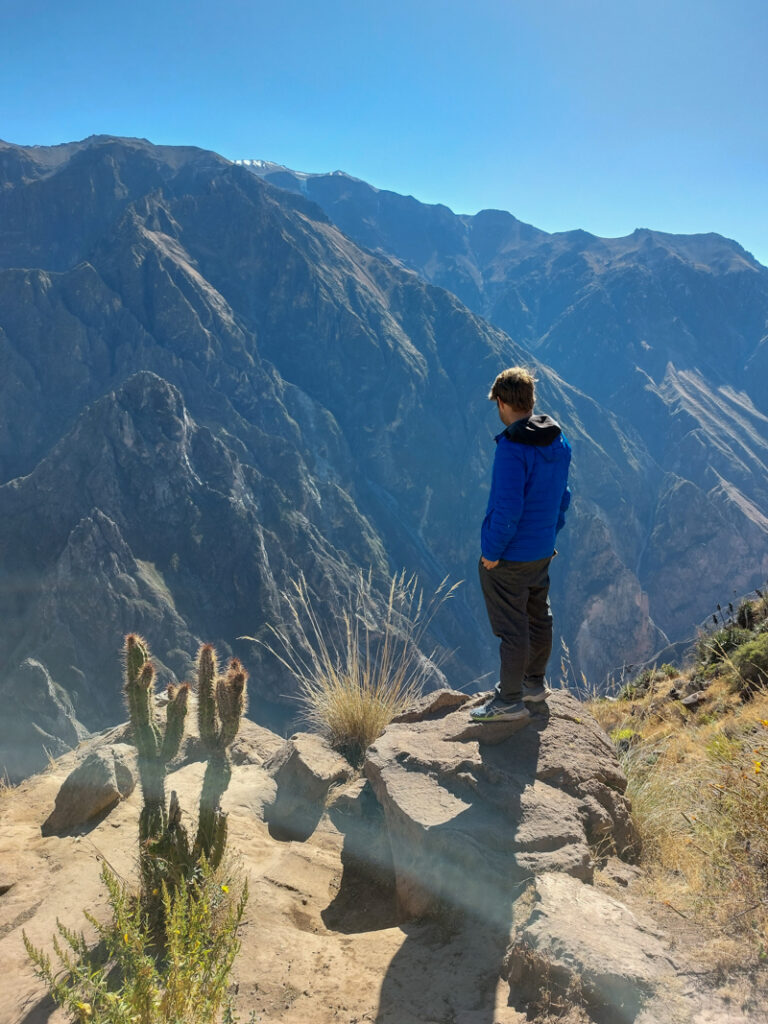
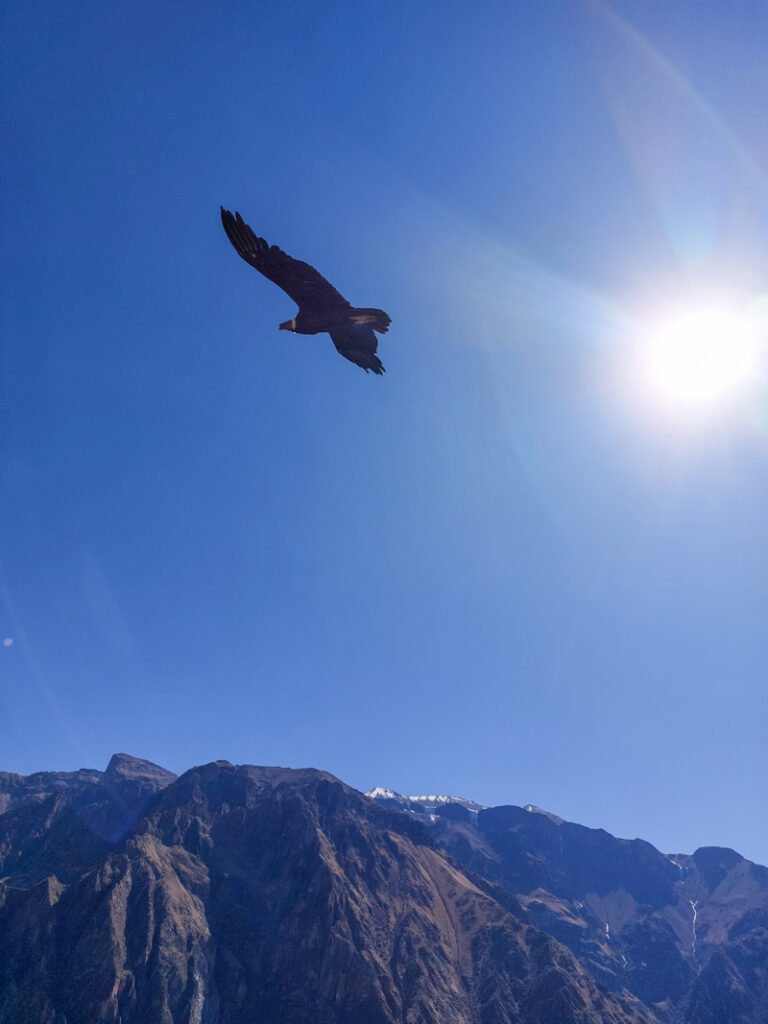
The highlights of the Colca Canyon trip include spotting Andean Condors swopping across the canyon. These are some of the biggest flying birds in the world with a wingspan of around 3 metres! You’ll also get to warm up in the natural hot springs (so don’t forget your swimming costume!) and visit traditional Peruvian villages.
Day 8 – Arequipa
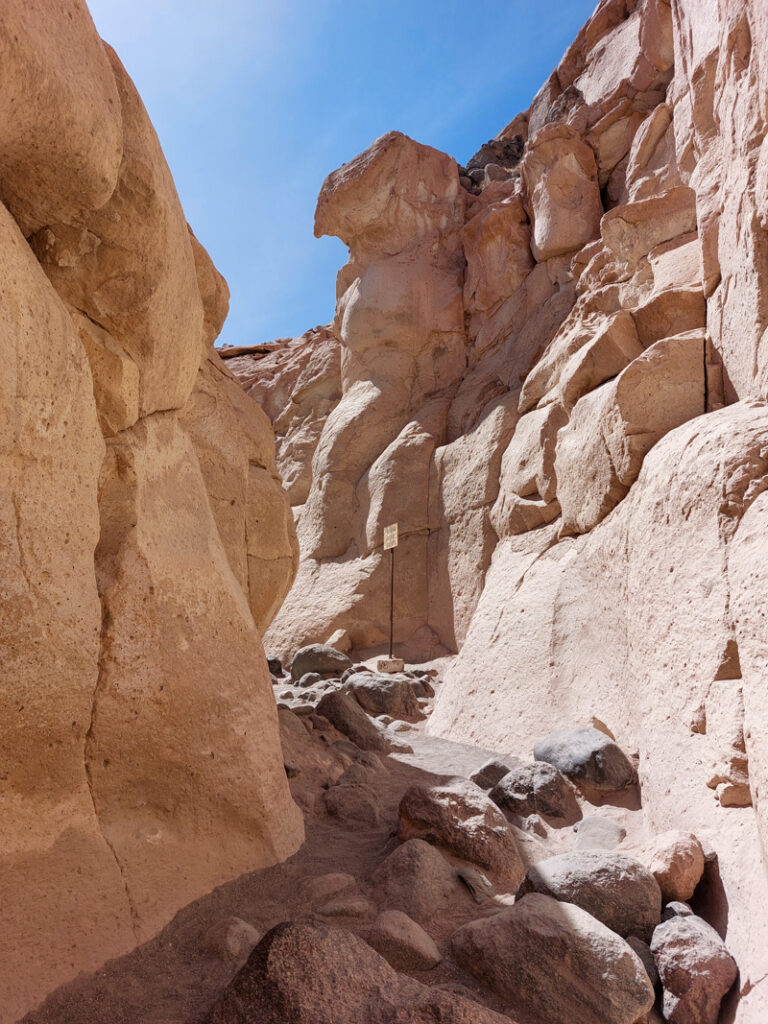
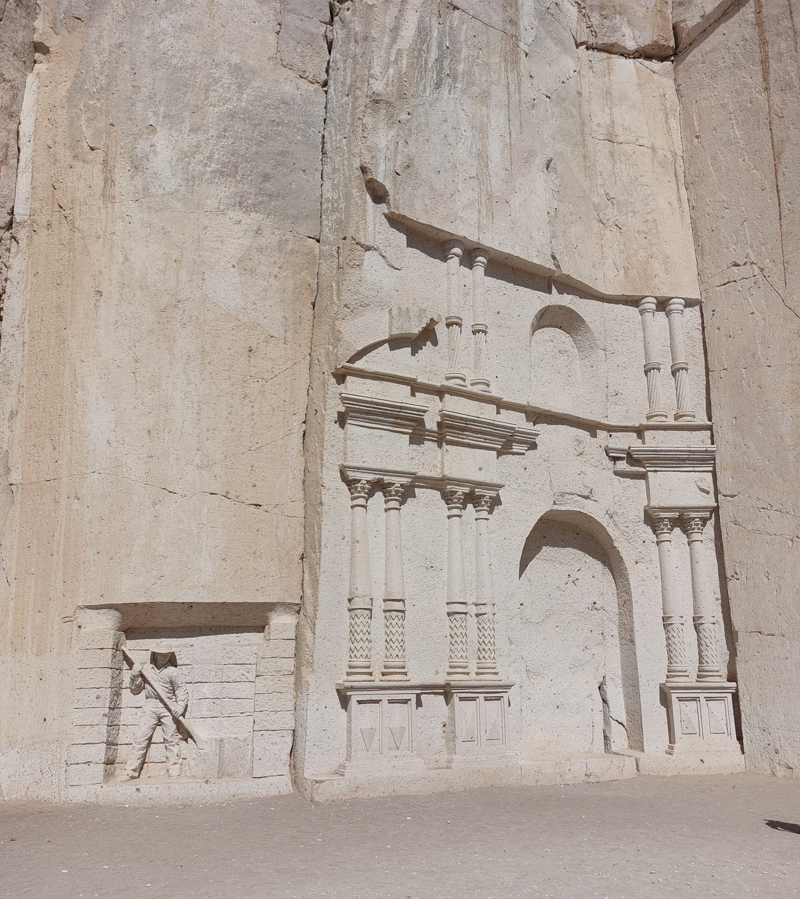
For your last day in Arequipa, I recommend joining a half day tour along the Ruta Del Sillar. This tour takes you to the Sillar canyons and quarries to show you the white lava rock that is the reason Arequipa is known as the ‘White City’. Most tours will take you through the Quebrada de Culebrillas – a walkway through the rock where you might be able to spot some ancient carvings. You’ll also visit Canteras de sillar Añashuayco – a quarry that has become an outdoor sculpture gallery. Here you’ll find impressive sculptures and carvings made from the Sillar rock, including a replica of Petra.
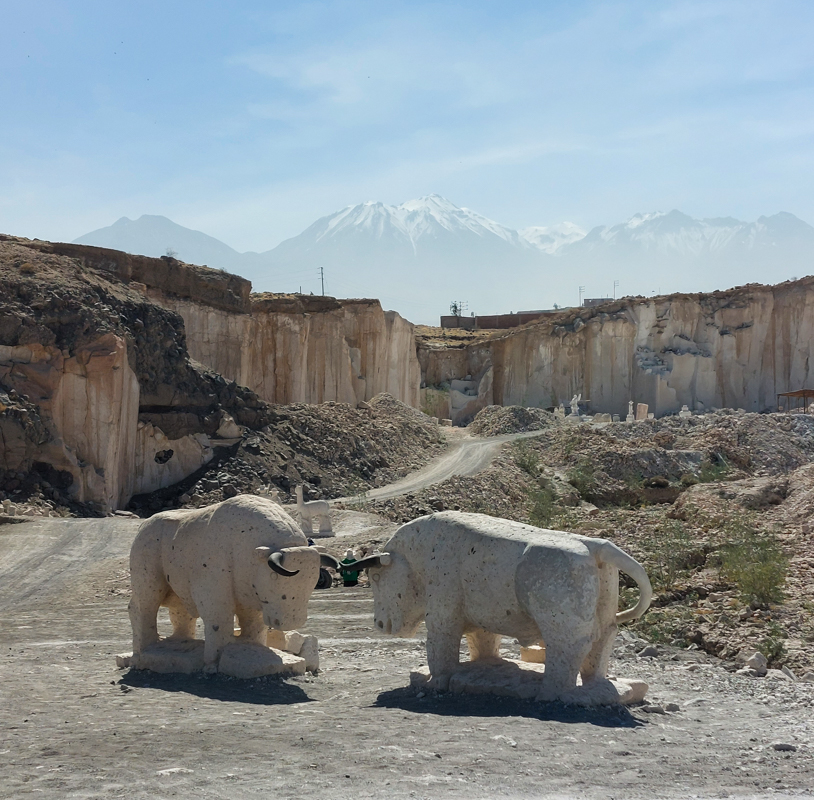
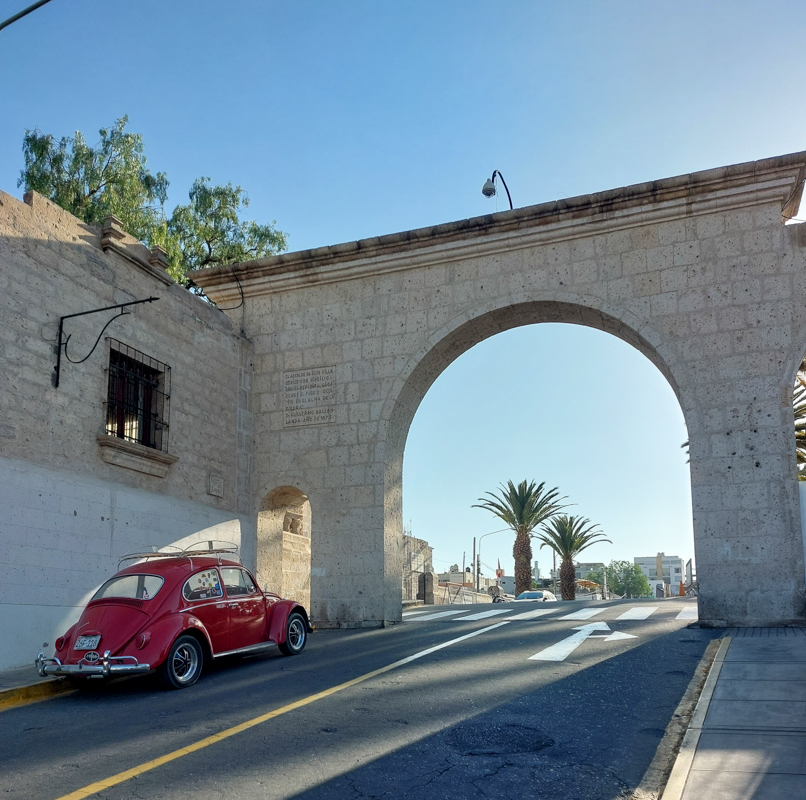
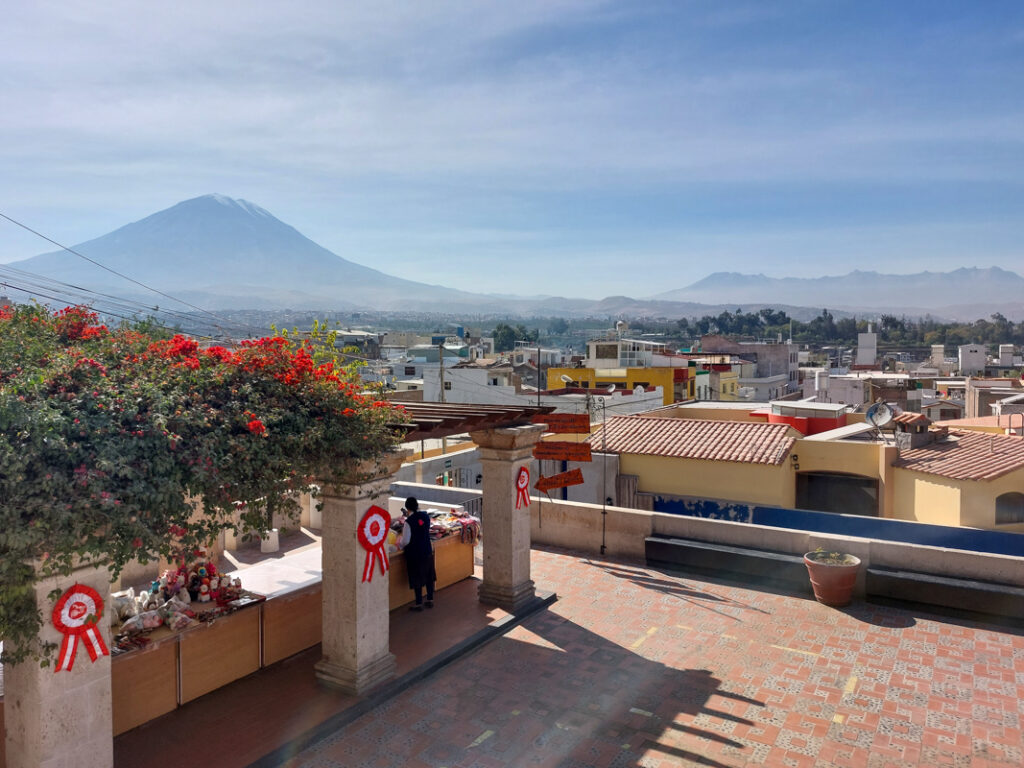
For the rest of the day, explore the city! Head to Mirador de Yanahuara for a view of the volcano overlooking the city. Try the local delicacy of queso helado – cheese ice cream!
Day 9 – Puno
Another early start but you’ll have plenty of time to sleep on the bus as you take the 5:45am bus from Arequipa to Puno. You’ll arrive in Puno at 13:00.
Puno is a small town on the shore of Lake Titicaca, one of the world’s highest lakes. It stretches across the border of Peru and Bolivia so if you are travelling into Bolivia next, I’d recommend going to Cusco first then ending your Peruvian leg in Puno before crossing the border to Copacabana, Bolivia.
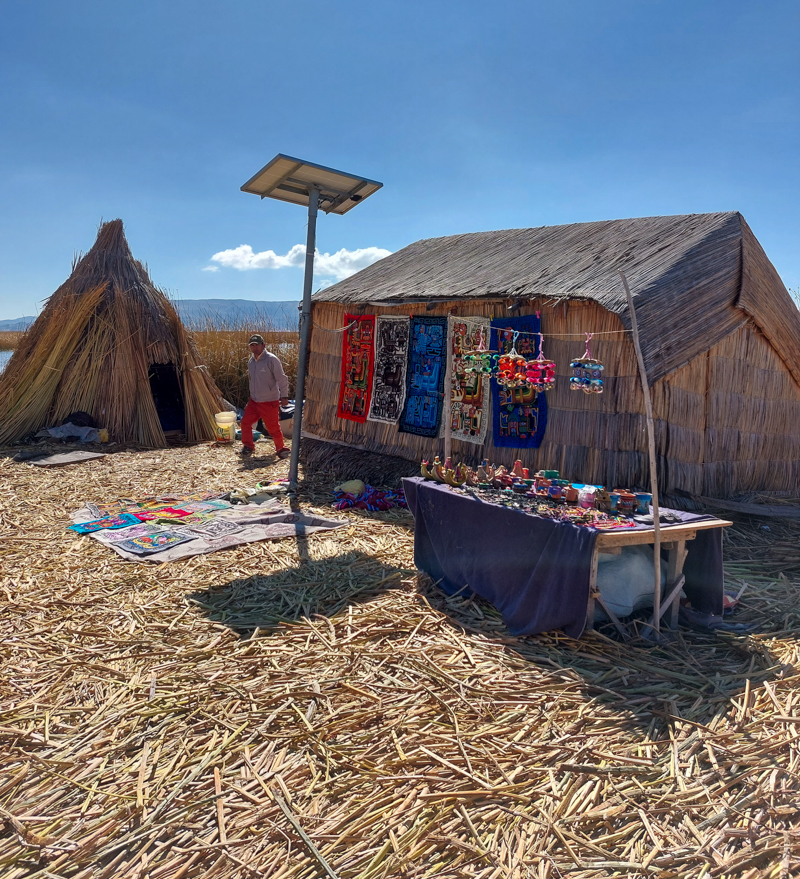
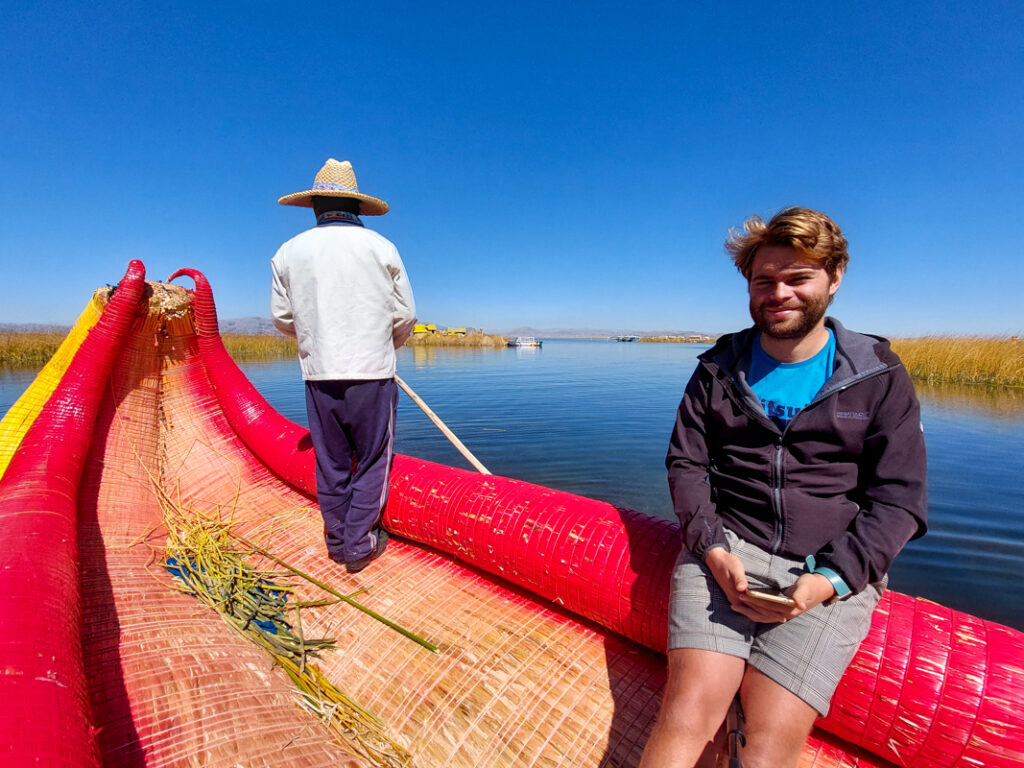
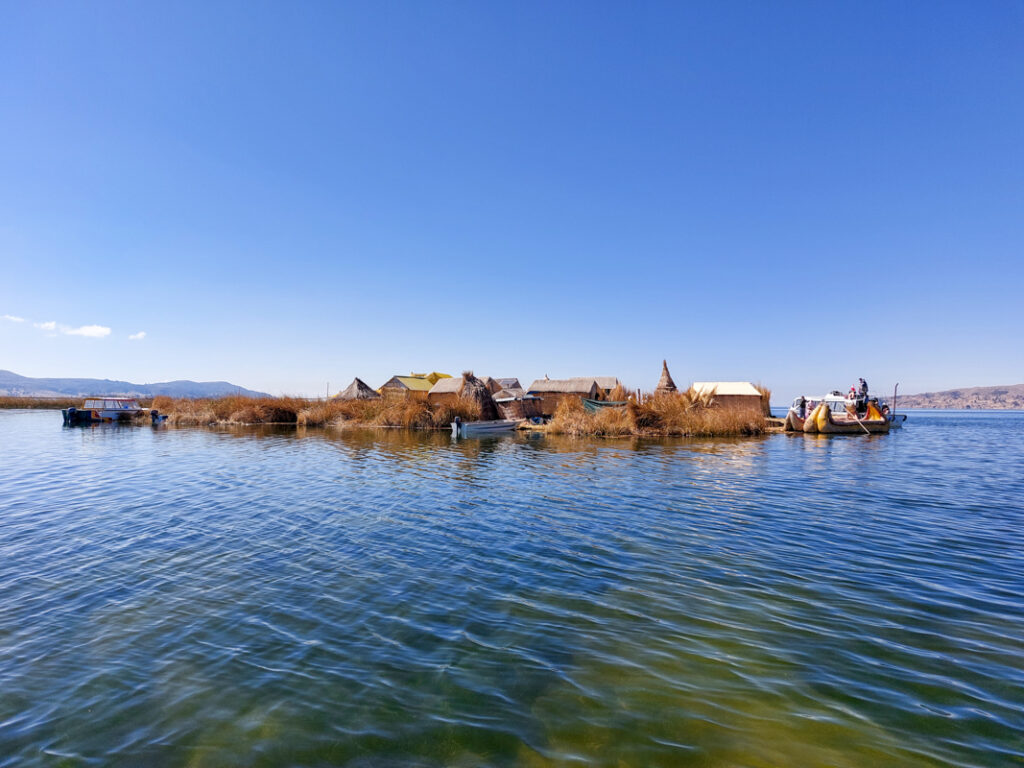
If you’re only visiting Peru, this will be a fairly quick stop on the way to Cusco. During your afternoon in Puno, take a tour of the Floating Islands. The islands were made from reeds by the indigenous Uros community; after hundreds of years, they still live in their floating homes. Many tours introduce you to Uros people to learn more about their culture and how they built their incredible island homes.
After your tour, grab some dinner in Puno before hopping on the next bus at 10pm which will take you to Cusco overnight.
Day 10 – Cusco
You’ll arrive in Cusco early in the morning. The altitude of Cusco is 3399 metres, so well above the altitude sickness level, so take it slow and drink lots of coca tea. Hopefully by this point you will have acclimated after visiting Colca Canyon, Arequipa and Puno.
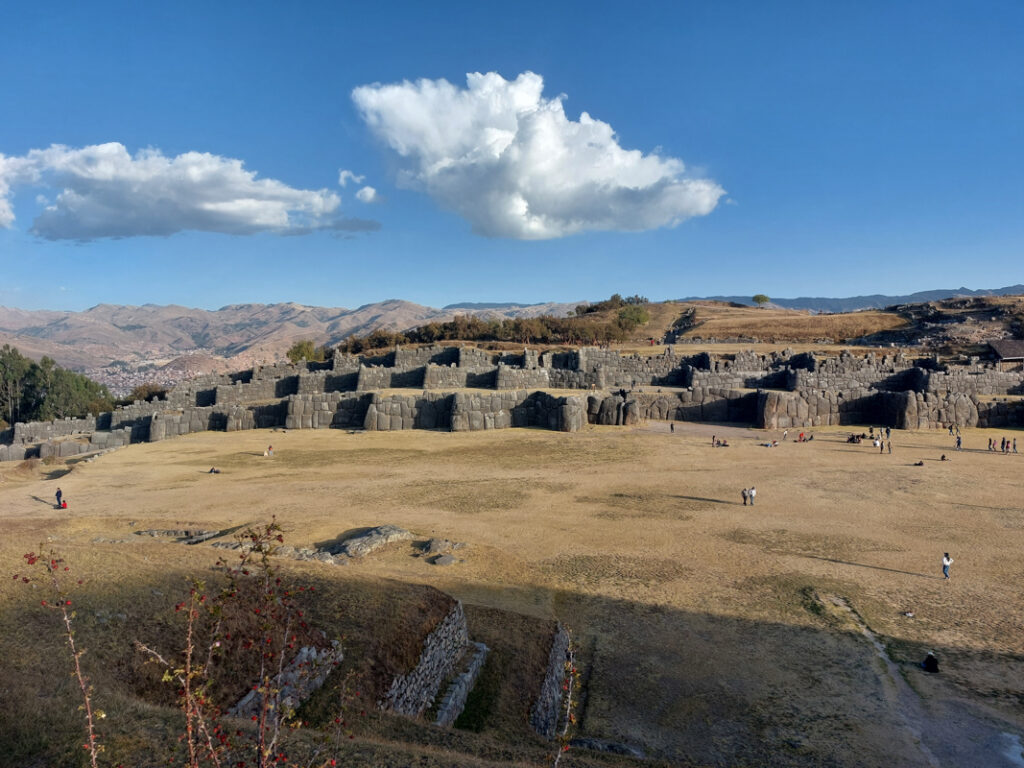
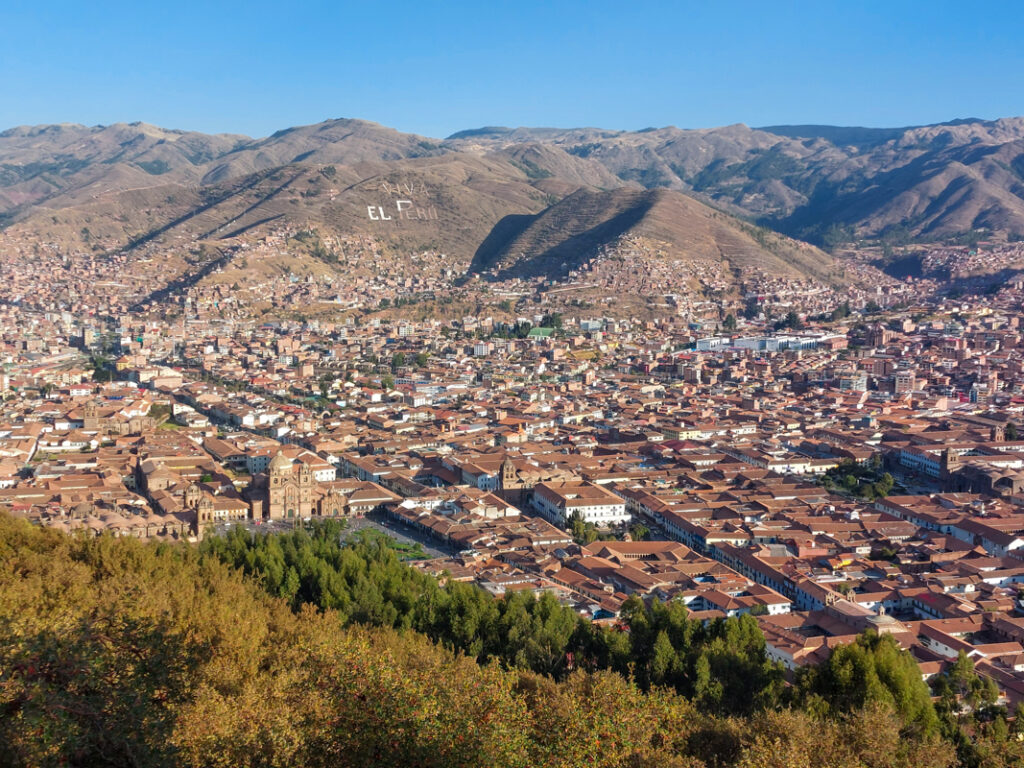
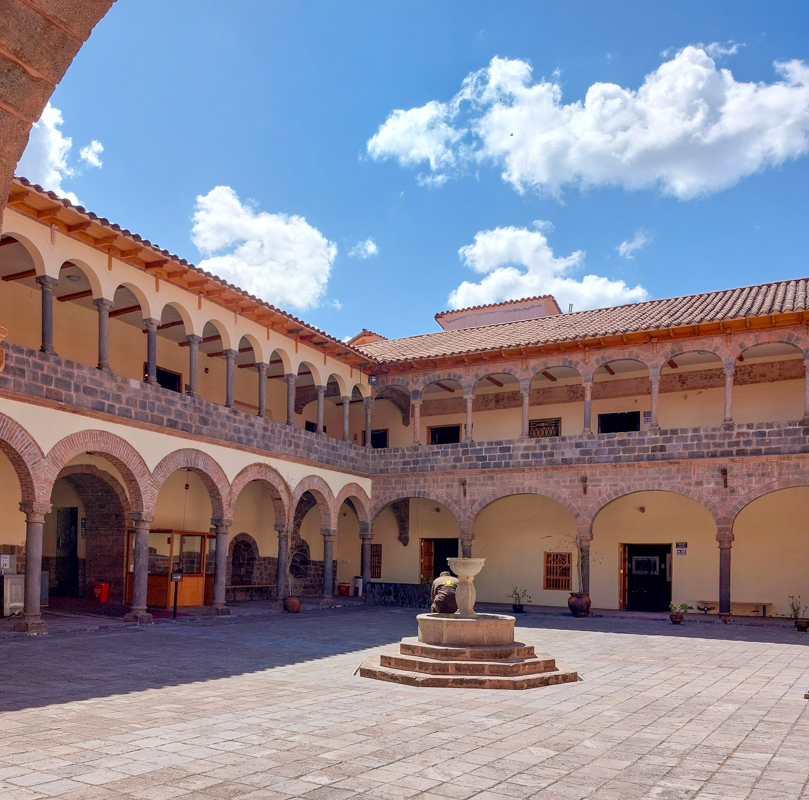
Here is a list of things to do and see in Cusco. You might not fit this all into your first day but you may have time on your final day, depending on your flight and some time after day trips if you have energy left.
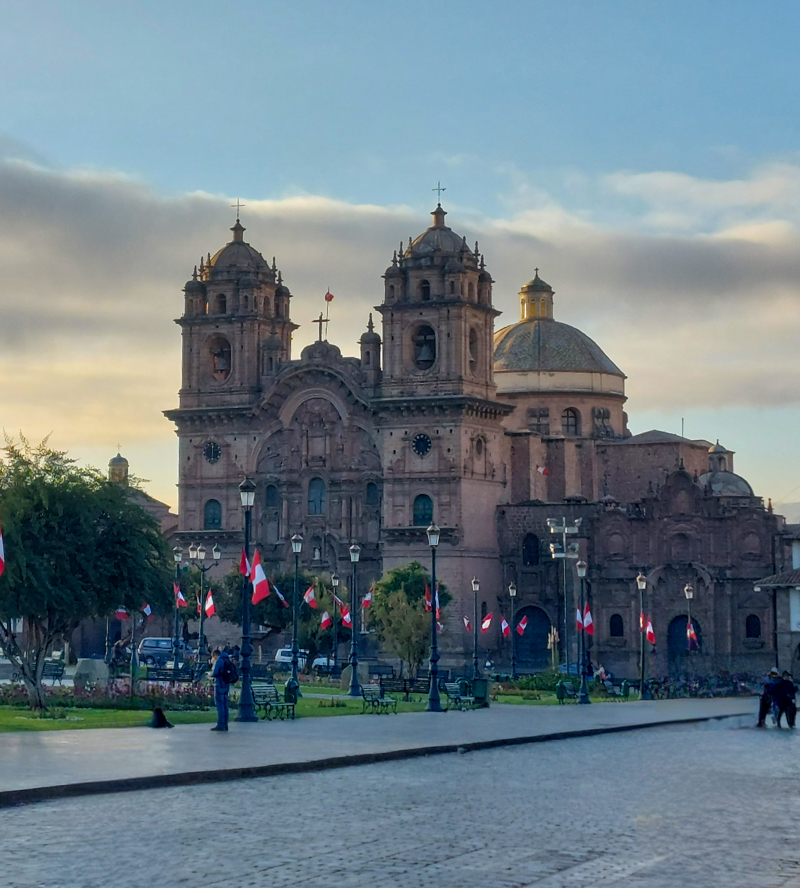
- Plaza Mayor de Cuzco – the central square in Cusco, a green square surrounded by restaurants, museums and a 16th century cathedral. This is often a meeting point for tours.
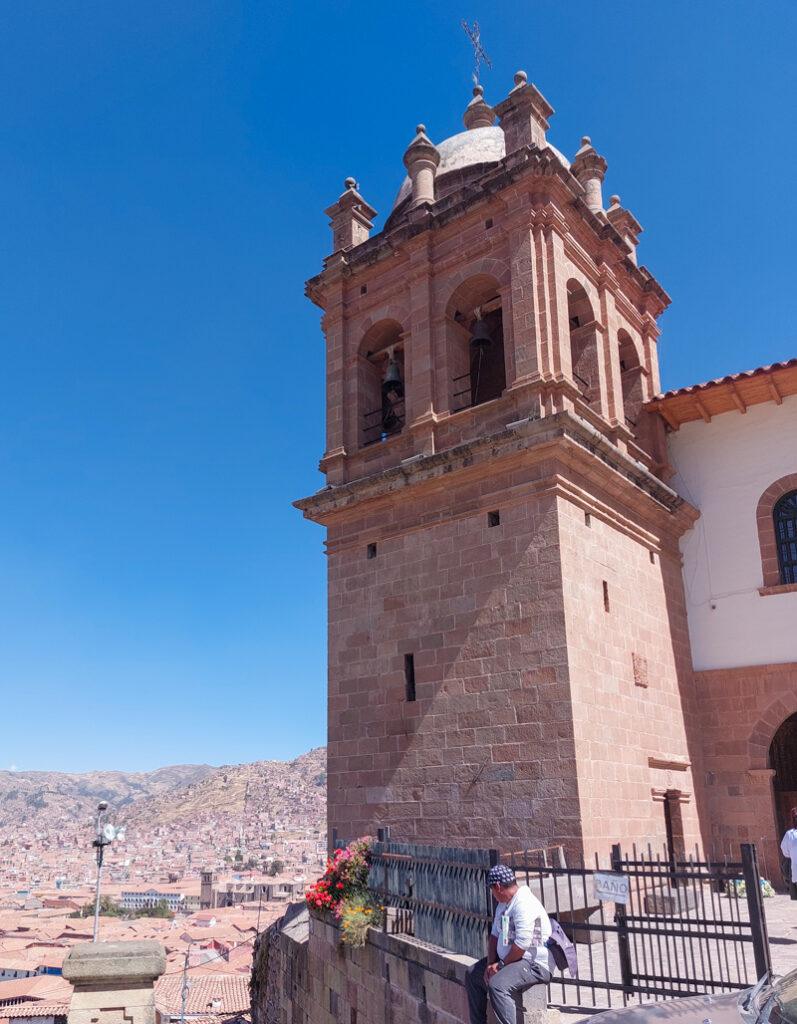
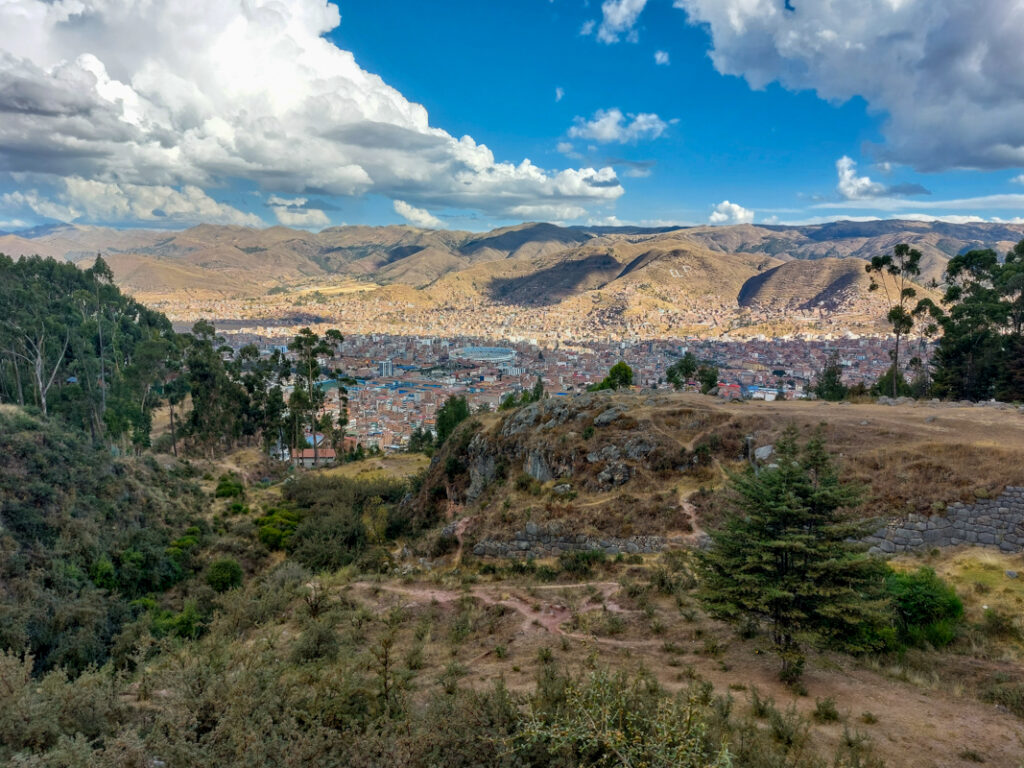
- Mirador de Sán Cristobal – a viewpoint on a hill by an old church. A little further up hill, you’ll find the Sapantiana Aqueduct. Both can be visited on the way to Saqsaywaman.
- Saqsaywaman – the ruins of an Incan complex
- Quenco Archaeological complex – more Incan ruins with a temple and a rock tunnel. You can walk here from Cusco, it takes around 30 minutes uphill, some of the walk is along a main road, some is through woodland.
- Museo Machu Picchu Casa Conha – A museum centred around Machu Picchu. There aren’t any information panels at Machu Picchu itself so unless you have a guided tour its hard to know what exactly you’re looking at there. Going to the museum before or after your visit can help give you more context.
- Regional Historical Museum of Cusco – a museum centred around Incan art and archaeological findings. The museum spans a broad history from fossils of ancient animals to Spanish colonialism.
- Art museums – there are several art museums in Cusco. The contemporary and popular art museums are both included in the tourist ticket.
- ChocoMuseo – a chocolate shop and workshop. You can taste Peruvian chocolate here and have a go at making your own in a chocolate making workshop.
If you’re interested in exploring a few of the museums and archaeological sites, I recommend heading to the tourist office (Galerías Turísticas) first and buying a Cusco Tourist Ticket. It covers entry for many of the sites listed above as well as attractions in the Sacred Valley (Day 13) so could save you a lot of money.
Peru Travel Posters
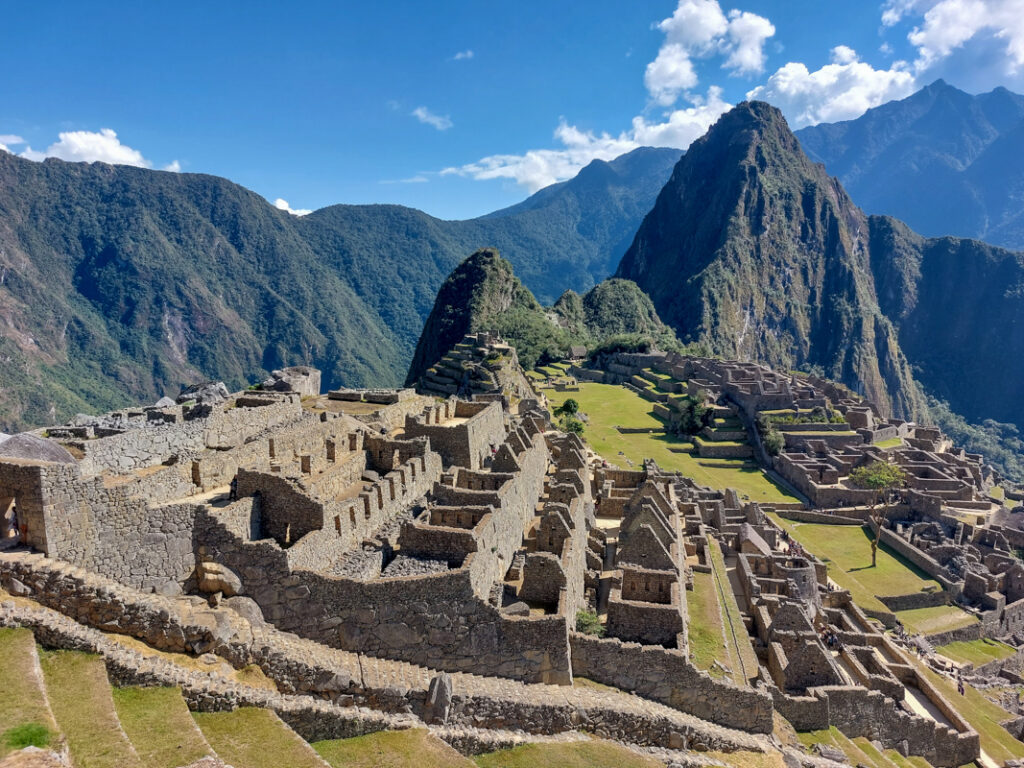
Day 11 – Machu Picchu
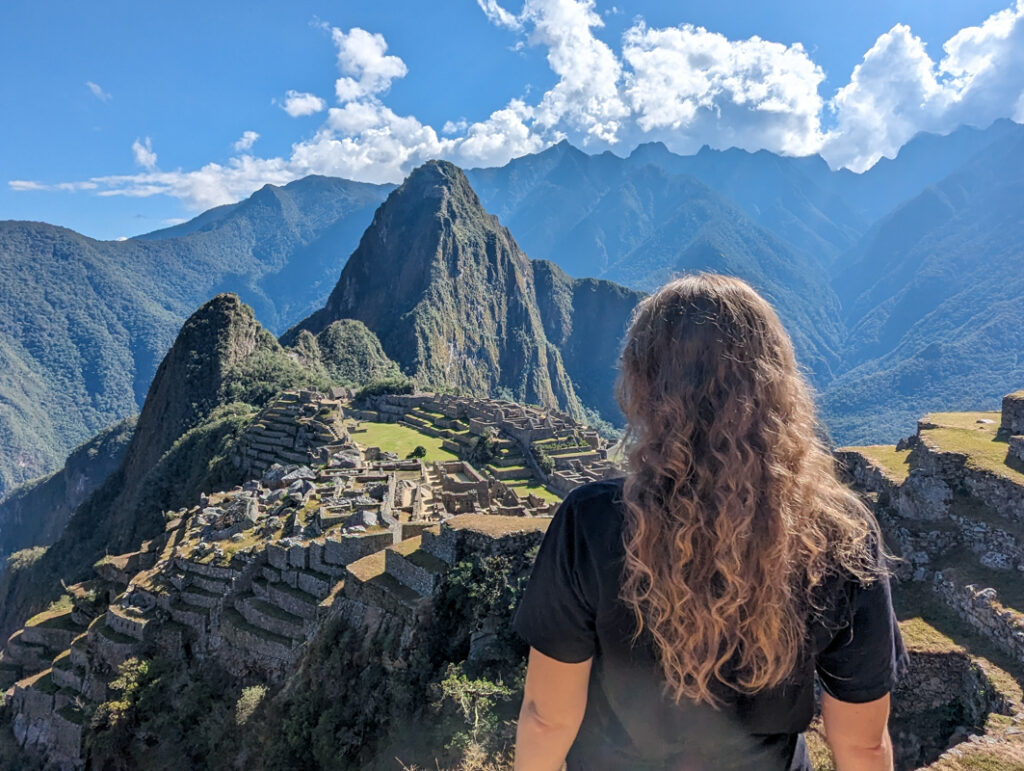
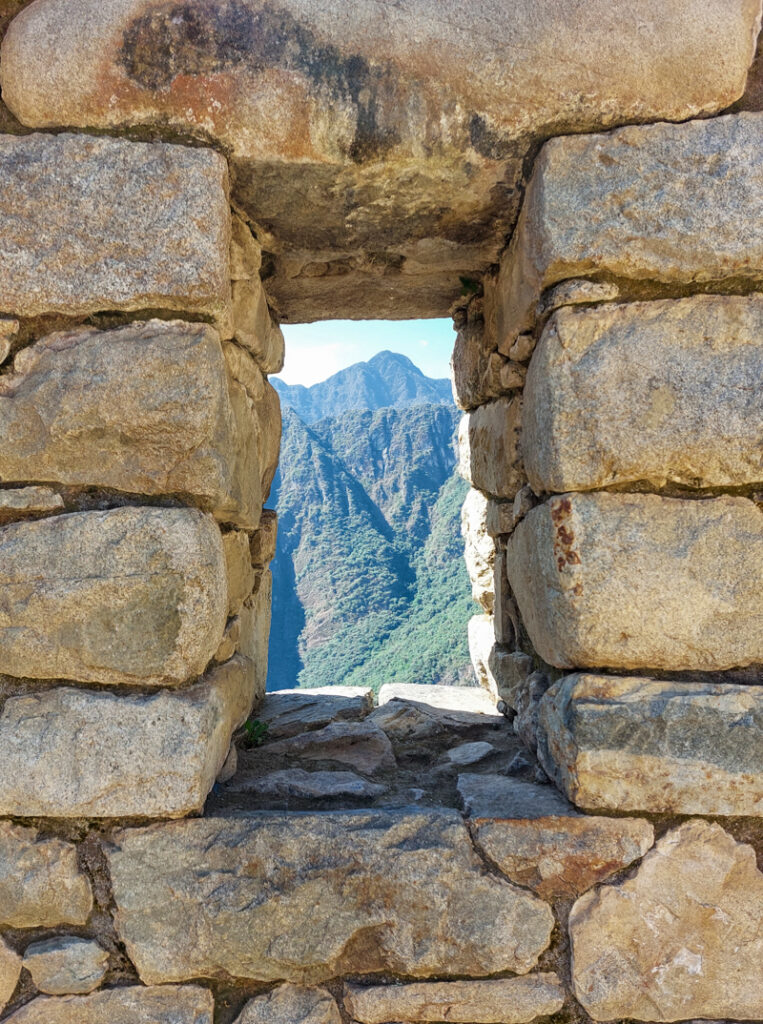
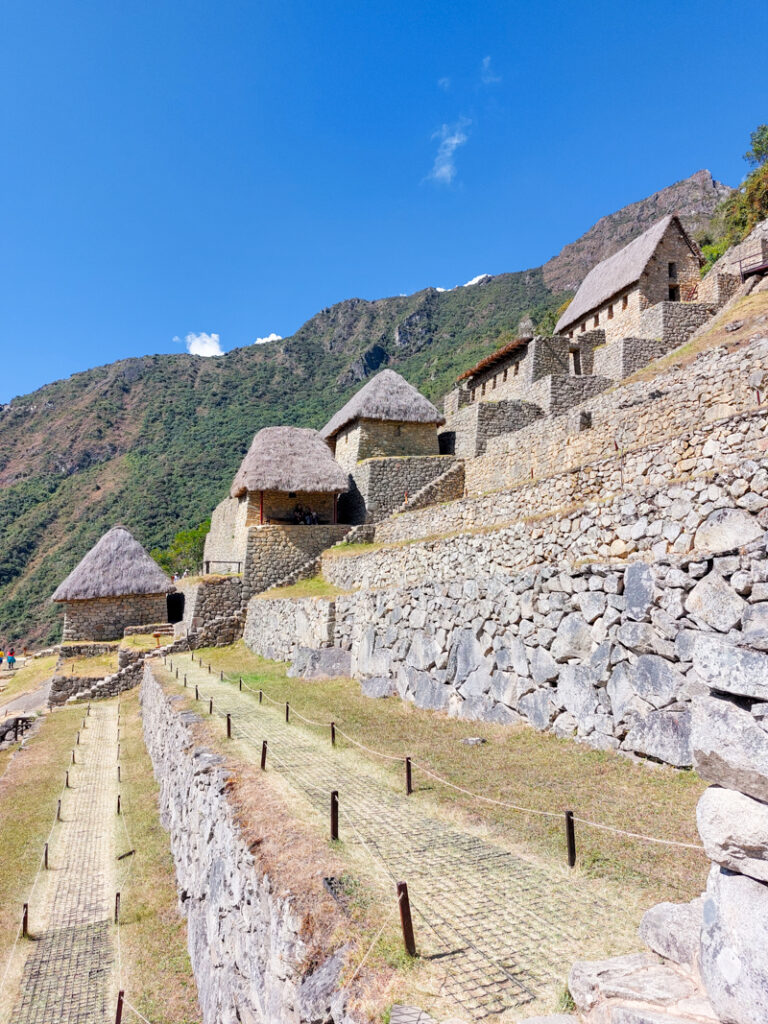
On Day 11, you’ll tick a big item off your bucket list – visiting Machu Picchu. As mentioned before this itinerary doesn’t factor in time for multi-day treks to Machu Picchu but you can add in days if you really want to trek the Inca trail or Salkantay trail. The day trip option here does still allow for some hiking if you want it.
Be sure to book your trains and Machu Picchu tickets a few weeks in advance to ensure you get the time slots you want in order to complete this in a day trip. You could also get the train the night before and stay overnight in Aguas Caliente.
How to get the train to Machu Picchu from Cusco
There are several different types of train you can get, they vary in terms of luxury and views as some have glass ceilings. We took the PeruRail Expedition train – the cheapest – but it was still fairly spacious and had skylights. The trains don’t all depart from the centre of Cusco so check where you are getting on:
- Poroy is a 30 minute taxi ride away from Cusco.
- Wanchaq is closer to the centre of Cusco but the journey from Wanchaq includes a 2 hour bus to Ollantaytambo then a 2 hour train to Machu Picchu.
- San Pedro is in the centre of Cusco’s old town (10 minute walk from the main square) but there are fewer trains from there.
How to Buy Machu Picchu Tickets
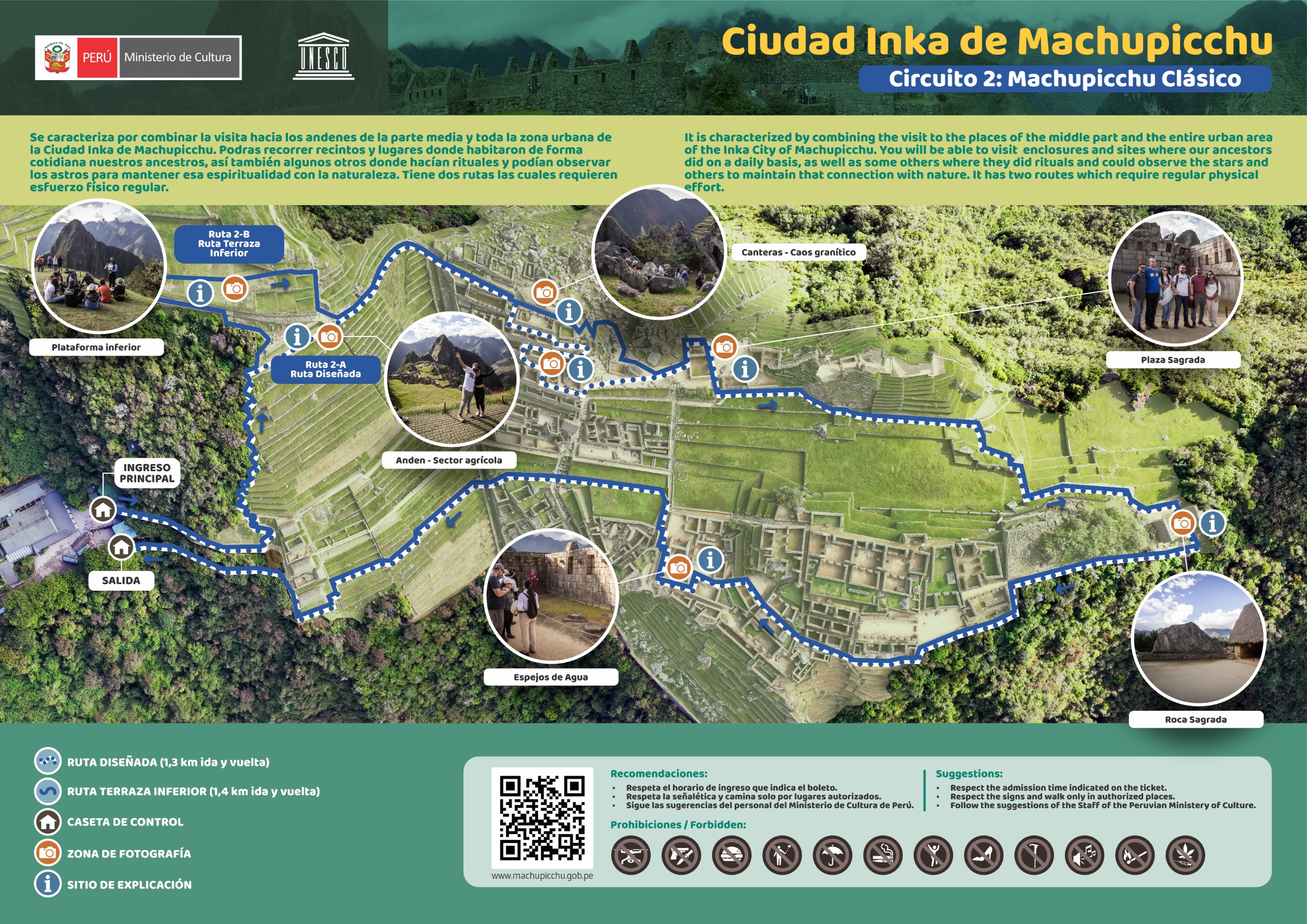
Purchase your Machu Picchu tickets online in advance. You have to select a time slot, so make sure your times line up with your trains. You’ll also need to decide which circuit to take. This is the route you will walk around the ruins. We opted for Circuit 2 as it seemed to cover the most ground.
How to get to Machu Picchu from the Station
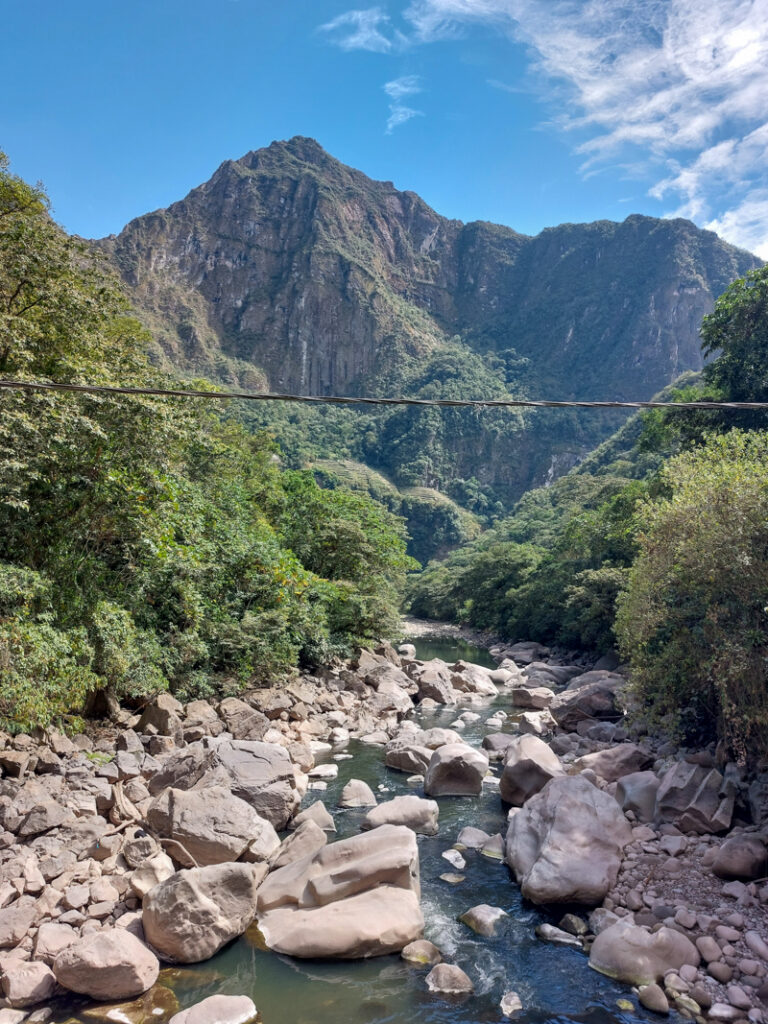
When you arrive by train, you’ll have to navigate your way out of the station via an expansive market of souvenirs and crafts. Once you’re in the town of Aguas Caliente, you can either get the bus up to the entrance of Machu Picchu or hike up the mountain. This takes around 1.5 hours. Be sure to bring plenty of water with you! If you’re going to hike, follow the river round to Camino peatonal a Machu Picchu – this is the start of the trail. On the map it looks like a long winding road, this is actually the route the bus goes. There are steps and paths that shortcut through the roads so your hiking trail will be more direct.
Take your time when you are up there and take lots of photos. If you decide at the last minute you want a guided tour there will likely be tour guides at the entrance offering you a spot.
Afterwards grab some food in town before getting your train back to Cusco.
Day 12 – Rainbow Mountain
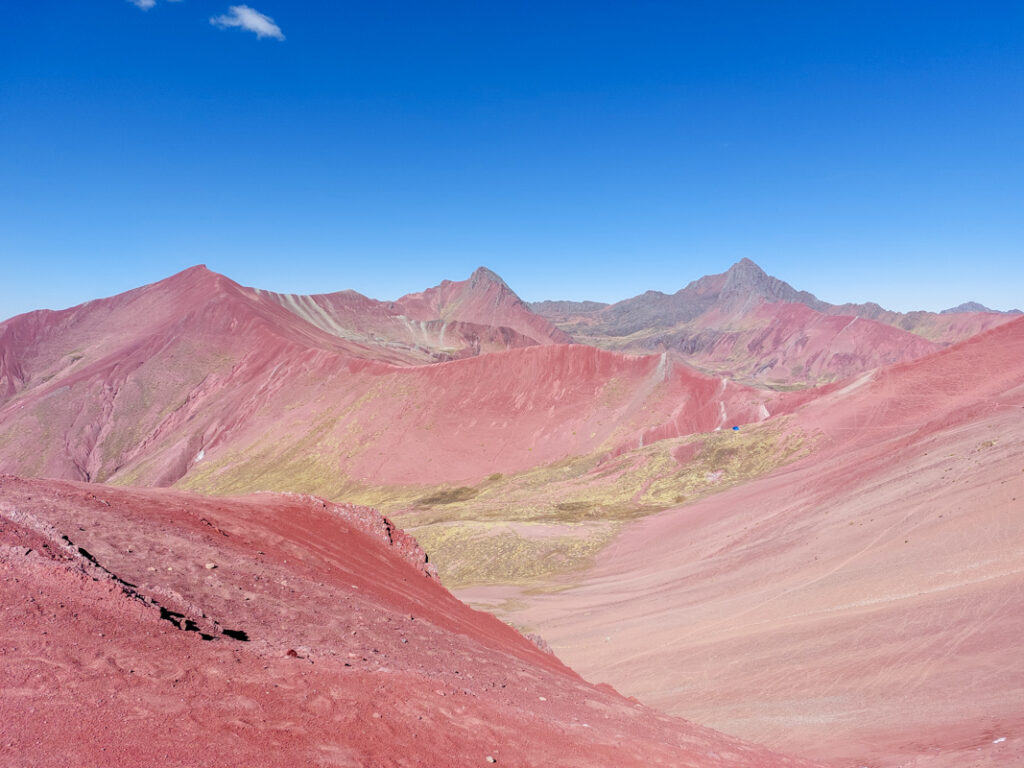
Time for another day trip! Rainbow Mountain, also called Vinicunca is a colourful mountain of reds, yellows, greens and blues due to the mineral composition in the rock. This is the highest point on the itinerary at over 5000 metres so if you have struggled with altitude sickness and not acclimatised at this point, perhaps skip this trip as there is also hiking involved. That being said, I don’t think of myself as a particularly fit person and I was worried about my breathing as I have asthma but I completed this with no problem!
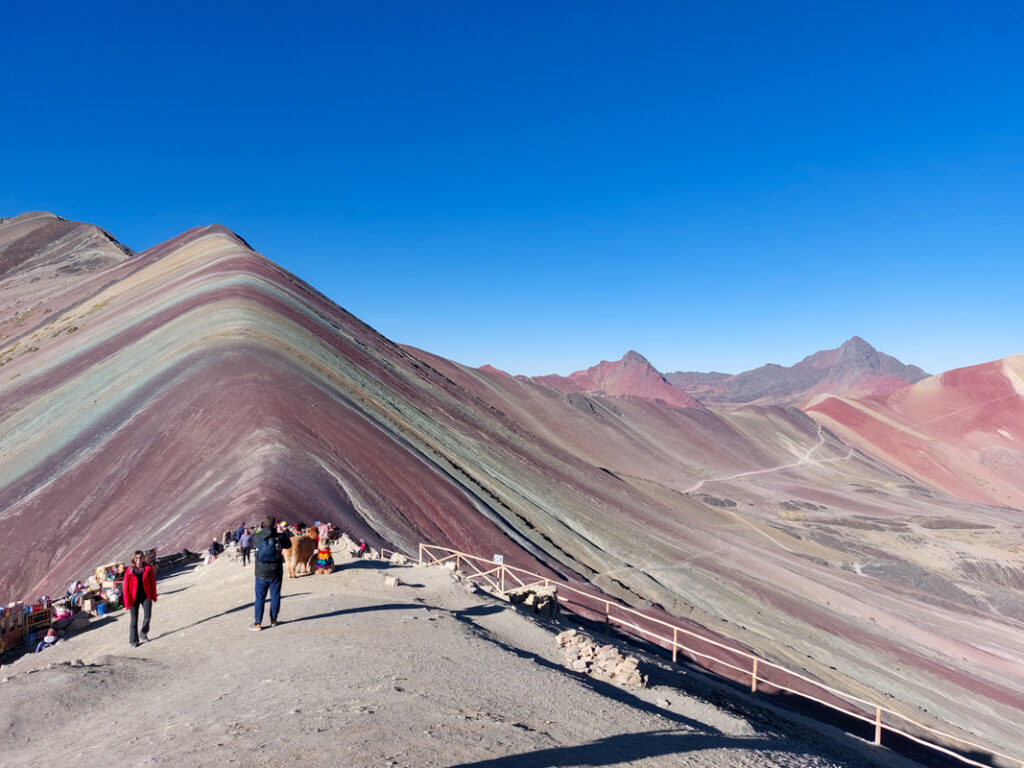
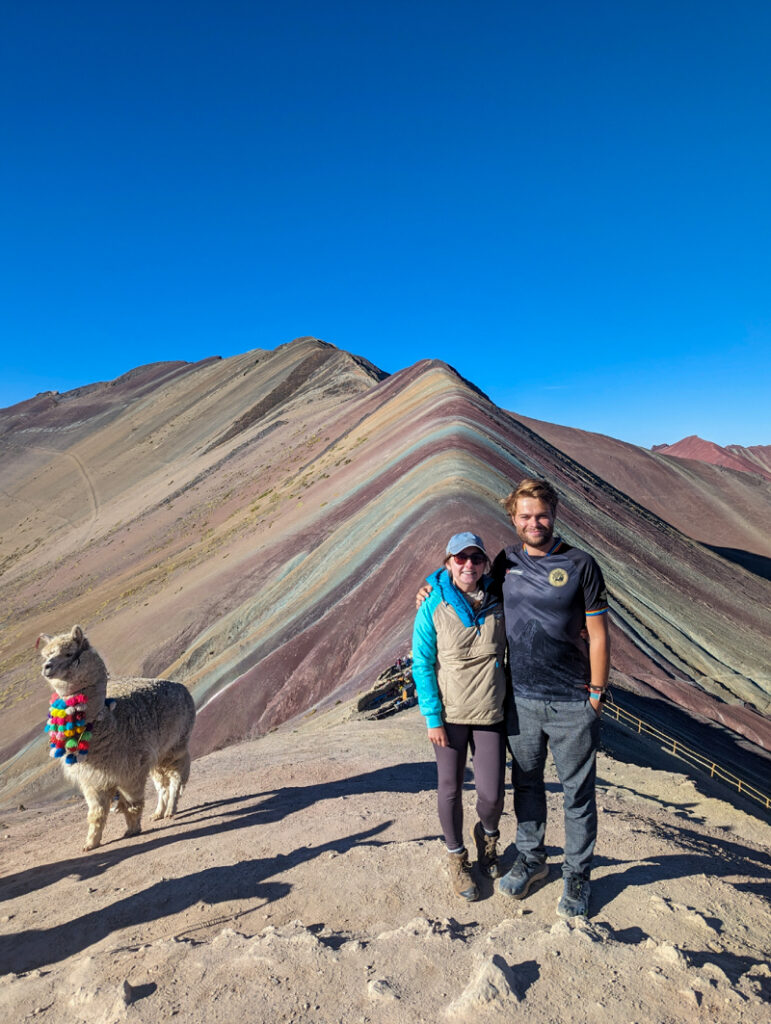
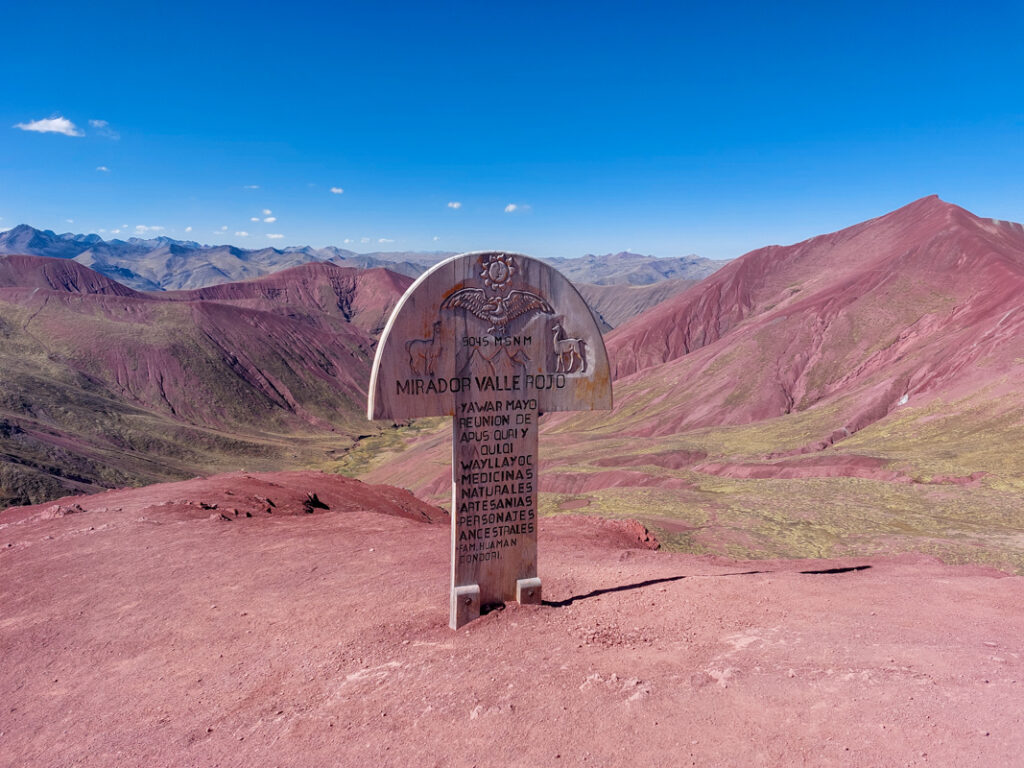
We booked our tour via Rainbow Mountain Travels. It was an early start (3am!!) but we stopped for breakfast on the way and were one of the first groups to reach the mountain so it was worth it to be free of the crowds. The trip also included a visit to the Red Valley which also had spectacular views.
Click here to read more about day trips from Cusco
Day 13 – Sacred Valley
Final day trip – this time heading back in time to the land of the Incas to explore the Sacred Valley. We booked our tour via Inca Jungle Trek. The price has increased a lot since we did this tour but there are lots of similar tour options on Viator. Again, an early start but a jam packed day. The tour included visits to:
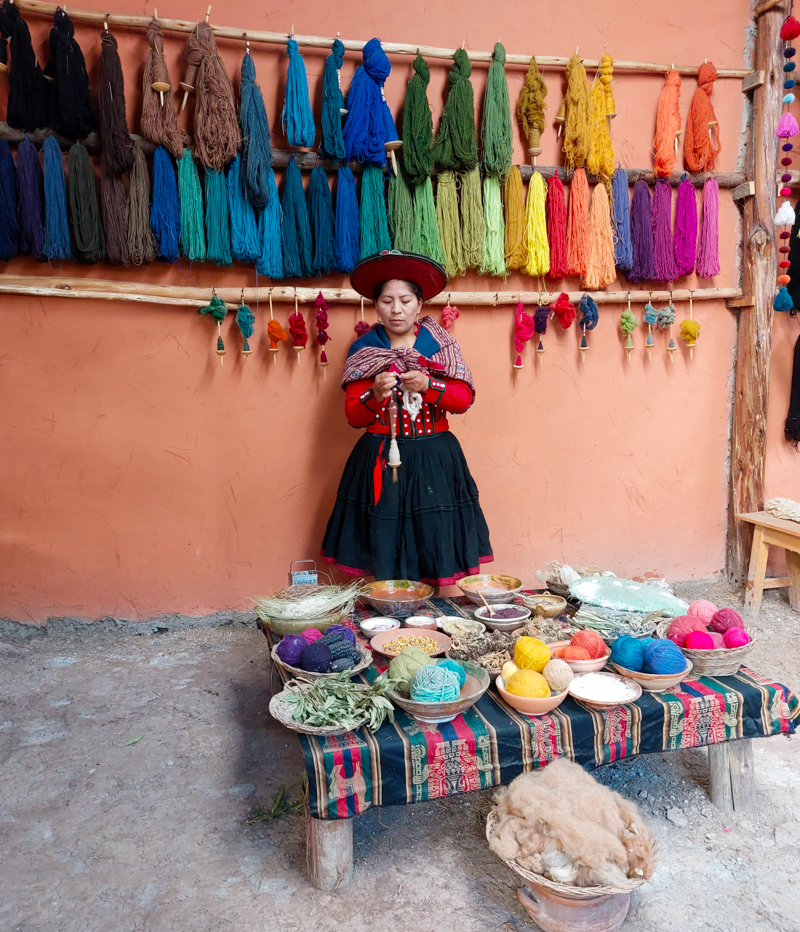
- Chinchero – a village where we visited a shop specialising in items made from alpaca and llama wool. We were given a demonstration on the traditional methods of dying the wool. For example, red dye is sourced from cacti parasites.
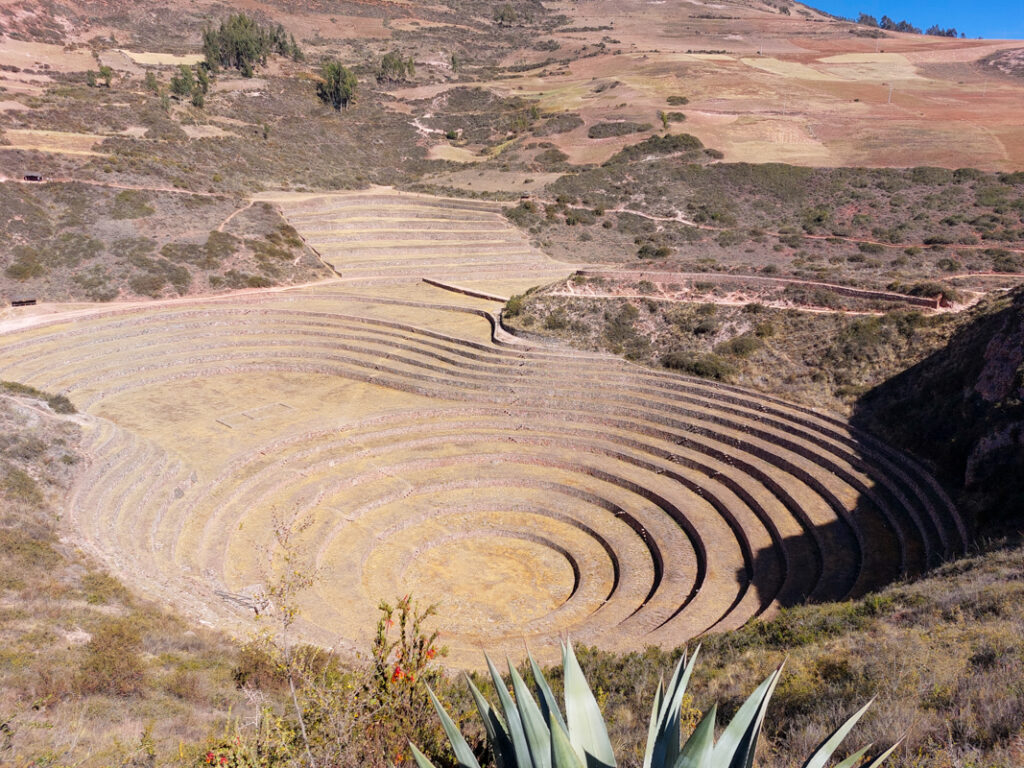
- Moray – a huge terraced landscape created by Incas to grow crops at different levels as the temperature differs from the bottom to the top of the terrace.
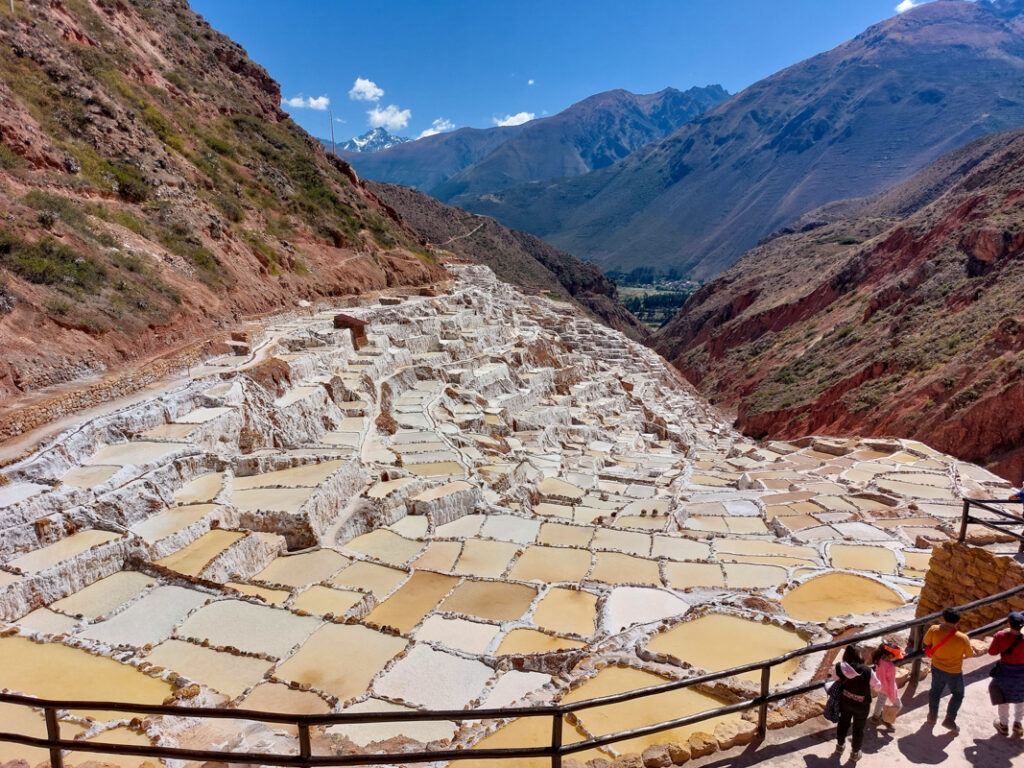
- Maras Salt Mine – a huge array of shallow pools used to evaporate salt water to collect salt. The site has been expanding over 800 years and is still in use, with all pools fed by the same stream from an underground lake.
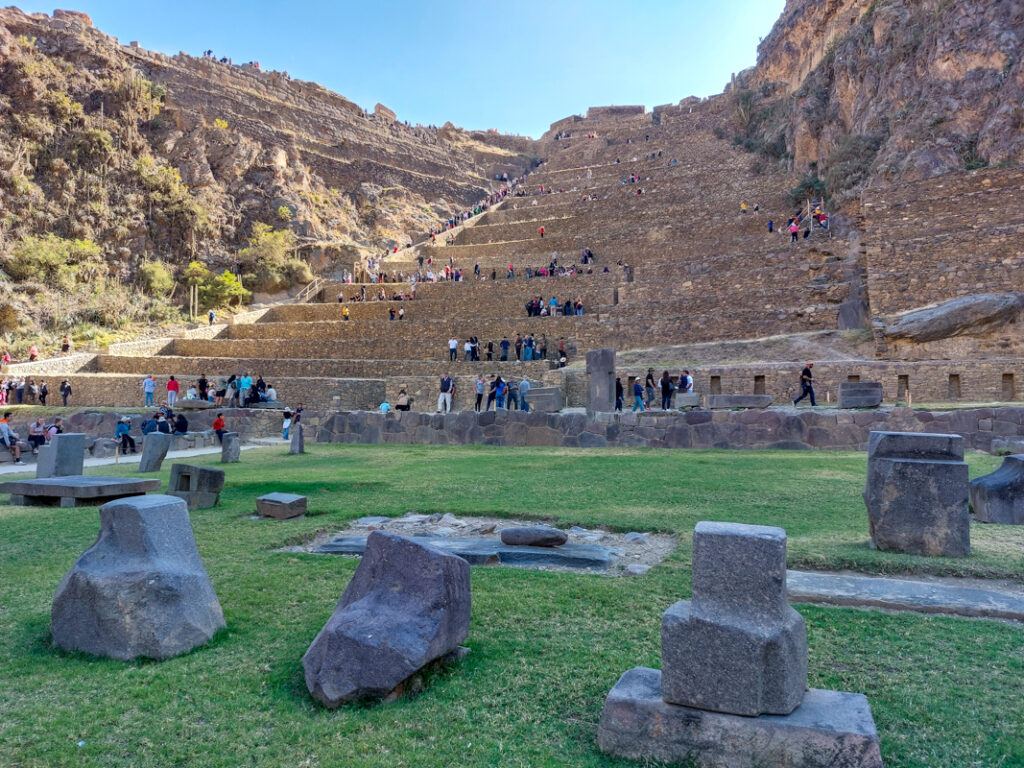
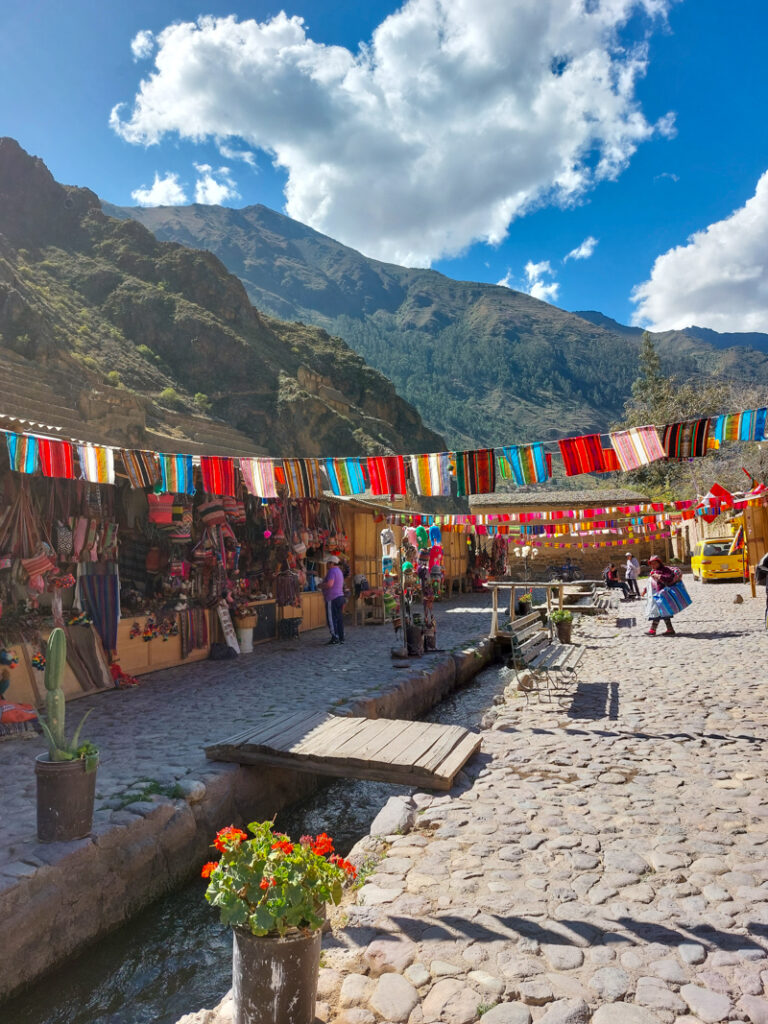
- Ollantaytambo – a village with a market, archaeological sites and more steep terraces.
- Pisaq – a huge terraced site on the mountain with ruins of structures and fountains. From here, we could also see a mountain face dotted with holes which were used by Incas as tombs.
Day 14 – Cusco
For your final day in Cusco, visit any of the museums, shops or attractions in town that you may have missed. Squeeze in as much as you can before your flight home!
1 thought on “Peru 2 Week Itinerary: Lima to Cusco”